Scientific Temper in Education: How Inquiry-Based Learning Builds Critical Thinking
Scientific temper in education encourages students to think logically, examine evidence, and explore ideas through inquiry. Instead of relying only on memorization, scientific temper in education promotes discussions, problem-solving, and collaborative learning that strengthen analytical thinking.
At Skalvi International School, this learning approach encourages students to ask questions, explore concepts, and evaluate ideas through participation and observation. Students are guided to think independently while engaging with their peers and teachers, creating a classroom environment that supports curiosity and understanding.
Scientific Temper in Education and Evidence-Based Thinking in Middle School
Middle school years are an important stage in the development of reasoning skills. During this stage, students move beyond memorizing facts and begin to understand concepts and evaluate information.
Through scientific temper in education, students gradually develop the ability to question ideas, analyze information, and interpret evidence. This stage of learning helps students become more confident in exploring concepts and forming conclusions.
In the middle years at Skalvi International School, students learn to formulate problems, explore different solutions, evaluate outcomes, and communicate their ideas clearly. These skills help students build strong analytical thinking abilities that support lifelong learning.
How Classroom Interaction Encourages Scientific Thinking
The classroom environment plays an important role in encouraging student participation. At Skalvi International School, classrooms are arranged in a U-shaped format to support interaction between teachers and students.
This arrangement allows every student to participate in discussions, share ideas, and observe the perspectives of others. It encourages collaborative learning and helps create a classroom environment where students actively engage with the subject.
Teachers guide discussions while students contribute their observations, questions, and ideas, strengthening the practice of scientific temper in education.
Learning Through Knowing by Doing
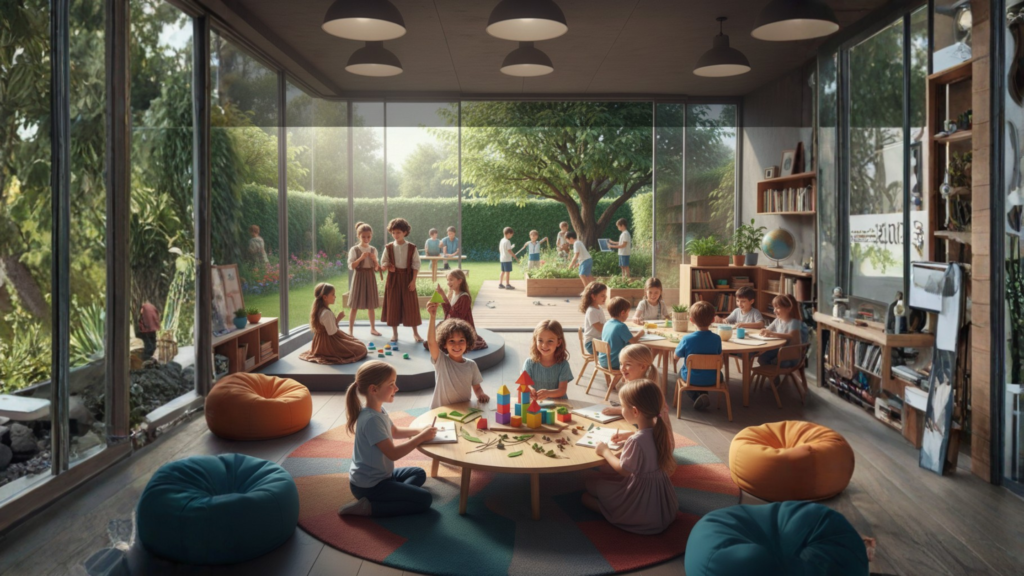
The philosophy of Knowing by Doing encourages students to learn through participation and practical exploration. Instead of only listening to explanations, students engage in activities that help them understand concepts more clearly.
Through discussions, projects, and collaborative tasks, students apply what they learn and develop confidence in expressing their ideas. This learning method supports scientific temper in education by encouraging curiosity and active exploration.
When students experience concepts directly, their understanding becomes deeper and more meaningful.
Developing Problem-Solving Skills Through Inquiry
Students develop stronger analytical abilities when they are encouraged to examine problems carefully. Learning to define a problem, explore possible solutions, and evaluate results helps students understand concepts more deeply.
At Skalvi International School, students are encouraged to frame questions, explore ideas, and discuss solutions together. This collaborative approach strengthens logical thinking, communication skills, and the ability to evaluate information effectively.
These practices help students develop a mindset that values reasoning, observation, and evidence-based thinking.
How Peer Learning Strengthens Understanding
Peer learning plays an important role in strengthening scientific temper in education. Through the Teach to Learn approach, students explain concepts to their classmates and discuss ideas together.
When students teach what they have learned, they remember about 90 percent of the concepts. Explaining ideas to peers also helps students clarify their understanding while improving their communication skills and confidence.
Teachers guide this process while encouraging students to share ideas and actively participate in discussions.
Supporting Learning Beyond the Classroom
Learning experiences extend beyond academic subjects. At Skalvi International School, students participate in Happy Hobby Hours where they explore activities such as sports, music, theatre, and visual arts.
These activities help students develop creativity, teamwork, and self-expression alongside academic learning. This balanced learning environment supports the philosophy of Life Beyond Academics.
Students also participate in integrated term projects where they present their learning through presentations, role plays, and discussions. These activities help students apply their knowledge in meaningful ways.
Frequently Asked Questions
Why is scientific temper in education important?
Scientific temper in education encourages students to think logically, examine evidence, and explore different solutions. This approach helps students develop critical thinking skills and confidence in problem-solving.
How does peer learning support scientific temper in education?
Peer learning encourages students to explain ideas, discuss concepts, and evaluate different viewpoints. This collaborative learning process strengthens understanding and promotes active participation.
Which classroom practices help develop analytical thinking in middle school?
Classroom discussions, collaborative projects, peer learning, and experiential learning activities help students explore ideas and evaluate information. These practices support the development of critical thinking and independent learning.