For families planning the 2027–28 academic year, choosing a school is not only about the immediate admission year. Parents may also think about how their child’s education can progress over the coming years. This makes school through Grade 12 in JP Nagar an important consideration for families looking for continuity within one educational environment.
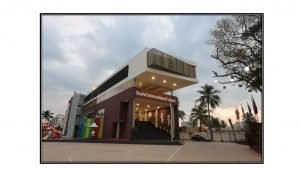
For families seeking quality education in South Bengaluru, institutions such as Skalvi International School in Kothnur, JP Nagar 8th Phase, can serve as a strong benchmark during this evaluation. Rather than focusing only on the next grade, parents can consider how the school supports children as their academic and developmental needs change over time.
What Does Grade 12 Continuity Mean?
Grade 12 continuity means having an educational pathway that extends through the senior secondary years within the same school environment. For families, this can mean planning ahead instead of having to reconsider schooling at every major academic stage.
Parents should verify:
→ Grades currently offered by the school
→ Progression from one academic stage to the next
→ Senior-school availability
→ Curriculum followed at different stages
→ Academic support as students advance
Long-term continuity can be particularly relevant for families who prefer stability throughout their child’s school years.
Why Should Parents Think Beyond the Immediate Admission Year?
When a child enters a new school, parents naturally focus on the current grade. However, educational requirements change as children grow.
Younger students may need strong foundational learning, while older students gradually require greater academic independence, subject depth and preparation for their next educational stage.
Considering the longer journey can help parents ask more relevant questions before admission.
How Can Continuity Benefit Students?
Remaining within a consistent school environment can provide familiarity with teachers, routines, peers and the broader school culture.
Potential benefits include:
→ Familiarity with the learning environment
→ Continuity in academic expectations
→ Established peer relationships
→ Consistent school routines
→ Reduced need for another school transition
However, parents should evaluate the actual educational experience rather than assuming that continuity alone guarantees a better outcome.
What Should Parents Check About Senior Grades?
Families considering a school through Grade 12 should understand what the institution offers as students progress into senior grades.
Useful questions include:
→ Which senior grades are available?
→ How does the academic programme develop across grades?
→ What learning resources are available for older students?
→ How are students supported as academic demands increase?
→ What opportunities are available beyond regular classroom learning?
These questions can help parents understand whether the school can support their child’s longer-term educational journey.
Does Academic Continuity Matter?
Academic continuity can provide students with a familiar educational framework as they move through different stages. Parents can examine whether teaching approaches and academic expectations develop progressively as students become more independent learners.
The transition from one grade to another should ideally help students build upon previous knowledge rather than experiencing every stage as completely disconnected.
Parents can explore Skalvi International School’s Academic Programmes to understand its academic structure.
How Does the School Environment Change as Students Grow?
A child’s needs at the primary level are different from those of a senior student. As students grow, they may require greater opportunities for independent learning, collaboration, communication and responsibility.
Parents can consider whether the school provides age-appropriate opportunities such as:
→ Projects and presentations
→ Independent research
→ Leadership activities
→ Collaborative learning
→ Academic guidance
→ Skill development
A school that supports different stages should recognise these changing requirements.
Why Is School Culture Important Over the Long Term?
Continuity is not only about remaining in the same building. It is also about the educational culture that students experience over time.
Parents can consider whether the school promotes:
→ Respect
→ Responsibility
→ Empathy
→ Integrity
→ Collaboration
→ Confidence
A consistent environment can help children become familiar with these expectations as they progress through school.
Families can explore Skalvi’s educational approach to understand its broader approach to student development.
What Role Does Technology Play in Long-Term Education?
Technology needs can also evolve as students progress through different academic stages. Parents can ask how digital resources are used to support learning at different levels.
Useful questions include:
→ Are digital resources integrated into classroom learning?
→ Does technology support research and independent learning?
→ Are students encouraged to develop responsible digital skills?
→ Does technology complement teacher guidance?
The objective should remain meaningful learning at every stage.
Should Parents Consider Infrastructure for Senior Students?
Infrastructure requirements can change as children progress through school. Parents should understand whether learning spaces and resources support students across different academic stages.
They can review:
→ Classrooms
→ Laboratories
→ Library
→ Activity spaces
→ Sports facilities
→ Technology resources
Parents should focus on how students use these facilities rather than simply looking at the number of facilities available.
What About Activities Beyond Academics?
Long-term schooling should continue to provide opportunities beyond academic subjects. Students can benefit from sports, arts, projects, leadership and collaborative activities throughout their school years.
Parents should ask whether opportunities are available at different age levels and whether students are encouraged to take increasing responsibility as they grow.
How Does Parent-School Communication Change Over Time?
Parent involvement can also evolve as children become older. Parents should understand how the school keeps families informed about academic progress, activities and important developments.
At the same time, older students may gradually take greater responsibility for communicating, organising their work and seeking guidance.
A healthy parent-child-school connection can therefore adapt as the student matures.
What Should Parents Consider Before Choosing a School Through Grade 12?
Parents can use a simple long-term checklist:
→ Verify the grades offered
→ Understand the curriculum pathway
→ Review academic progression
→ Ask about senior-school resources
→ Examine student-development opportunities
→ Consider technology
→ Review school culture
→ Understand parent-school communication
→ Check infrastructure
→ Consider the daily commute
This can help families evaluate whether the school fits both their immediate and future requirements.
Does the Daily Commute Still Matter?
Yes. A school may be suitable academically, but its daily location should also work for the family over the long term.
Parents should consider:
→ Travel time
→ Traffic during school hours
→ Transport availability
→ Pickup and drop arrangements
→ Effect on the child’s daily routine
Families considering JP Nagar 8th Phase can verify current campus information through the Skalvi Contact Page.
Why Should Parents Visit the School?
A campus visit can help families understand whether the school environment works across different age groups.
Parents can ask about the transition between academic stages and observe:
→ Classroom environments
→ Student interaction
→ Learning resources
→ Senior-school facilities
→ Campus organisation
This can provide a more practical perspective than relying only on online information.
Conclusion
For families considering a school through Grade 12 in JP Nagar, long-term educational continuity can be an important part of the admission decision. Parents should look beyond the immediate grade and understand how the school supports students as their academic, social and developmental needs change.
For families seeking quality education in South Bengaluru, institutions such as Skalvi International School in Kothnur, JP Nagar 8th Phase, can serve as a strong benchmark during this evaluation. For 2027–28 admission, parents can review the available grades, academic progression, resources, student opportunities and overall environment before making a decision.
Frequently Asked Questions
1. Why is Grade 12 continuity important?
It can allow students to progress through multiple academic stages within a familiar school environment.
2. What does school through Grade 12 mean?
It refers to a school offering an educational pathway that extends through Grade 12.
3. Should parents think about senior grades during early admission?
Yes. Understanding future academic stages can help families make a more informed long-term decision.
4. Can school continuity reduce transitions?
Remaining in the same school may reduce the need for another major school change, subject to the family’s requirements.
5. What should parents ask about senior-school education?
They can ask about grades offered, academic programmes, resources, support and opportunities for older students.
6. Does academic continuity benefit students?
A consistent academic environment can help students build progressively on their previous learning.
7. Should parents evaluate infrastructure for senior grades?
Yes. Parents should understand whether facilities and resources support students as academic requirements become more advanced.
8. Are extracurricular opportunities important in senior grades?
Yes. Activities such as sports, arts, projects and leadership can continue supporting student development.
9. How can parents evaluate long-term school culture?
They can observe how students and teachers interact across different age groups and understand the school’s approach to values and responsibility.
10. Should parents consider the commute for long-term schooling?
Yes. The daily journey can affect the child’s routine throughout their school years.