Parents often face a practical question while choosing among good schools in South Bangalore: should they select the school closest to home, or travel a little farther for a school that may be a better fit for their child?
There is no single answer for every family. A nearby school can make the daily routine easier, but distance alone does not determine educational quality. The better decision is usually the school that balances a manageable commute with the right curriculum, teaching approach, classroom environment, student support and opportunities for overall development.
Parents exploring South Bengaluru options can begin by understanding the educational approach of Skalvi International School, located in JP Nagar 8th Phase, Bengaluru.
Is the Closest School Always the Best Choice?
No. Proximity is valuable, but it should be considered alongside educational suitability.
A school close to home can offer several practical advantages:
→ Shorter morning travel
→ Less time spent in traffic
→ More time for rest
→ Easier participation in after-school activities
→ Simpler pick-up and drop-off routines
These benefits matter, especially for younger children.
However, parents should also ask whether the nearby school provides the teaching quality, academic support and learning environment their child needs.
A convenient location becomes less valuable if the child struggles to connect with the school’s teaching approach.
What Does a Better-Fit School Mean?
A best-fit CBSE school South Bangalore families consider is one that matches the child’s academic, emotional and developmental needs.
A better-fit school may provide:
→ Teaching methods suited to the child
→ Strong conceptual learning
→ Opportunities for practical application
→ Support when students face learning difficulties
→ Regular communication with parents
→ Sports and creative activities
→ A positive classroom environment
→ Academic continuity across future grades
Parents should therefore think about the child as an individual rather than choosing solely based on rankings or distance.
How Should Parents Compare Teaching Approaches?
Teaching style can significantly influence a student’s experience.
Some children understand concepts quickly through textbooks, while others benefit from demonstrations, activities, projects and discussion.
Parents should ask:
→ How are difficult concepts explained?
→ Do students participate actively?
→ Are practical activities part of lessons?
→ How are learning gaps identified?
→ Does the school encourage independent thinking?
Skalvi describes experiential and exploratory learning across its different stages. Families can understand its approach through the Academic Programmes.
The same CBSE curriculum can feel very different depending on how teachers deliver it.
Should Parents Travel Farther for Better Learning?
Sometimes, but only when the additional journey remains reasonable.
Parents should not automatically assume that travelling farther means accessing a better school. Instead, they should identify whether there is a meaningful educational advantage.
For example, a slightly longer commute may be worthwhile if parents find stronger student support, a teaching approach that suits the child better, or opportunities unavailable at the closest option.
However, a long and exhausting journey can reduce the benefit.
Children still need enough time for sleep, homework, recreation, hobbies and family interaction.
How Much Commute Is Too Much?
There is no universal ideal travel time.
The answer depends on:
→ Child’s age
→ Exact home location
→ Traffic conditions
→ School timings
→ Transport arrangement
→ Child’s daily schedule
Parents should test the route during actual school hours instead of depending only on map estimates.
For younger children especially, a shorter and predictable commute can be important.
For older students, a somewhat longer journey may be manageable if the academic environment is a significantly better fit.
Should Activities Influence the Decision?
Yes.
School education is not limited to examination preparation. Students also need opportunities to build confidence, creativity, communication, teamwork and physical fitness.
Parents should ask whether the school provides meaningful opportunities in sports, arts, projects, presentations and collaborative activities.
Skalvi outlines its broader educational philosophy and student-development approach through its Top 10 Reasons.
Activities should complement academic learning rather than replace it.
What About Long-Term Academic Continuity?
Parents should also consider whether the school can continue supporting the child as academic expectations increase.
A school that feels suitable in primary years may need to provide stronger academic guidance during middle, secondary and senior-secondary education.
Families who prefer continuity should check:
→ Grade availability
→ Academic progression
→ Student support at different stages
→ Senior-secondary options
→ Career and subject guidance where relevant
Thinking several years ahead can help reduce unnecessary school changes.
Visit Both Schools Before Choosing
When parents are deciding between the closest school and a potentially better-fit option, visiting both can make the comparison clearer.
During the visit, observe:
→ Teacher-student interaction
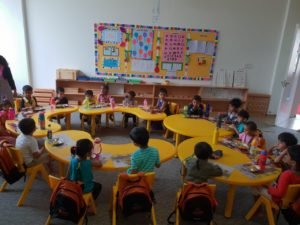
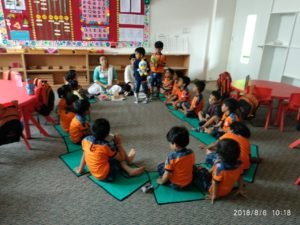
→ Classroom atmosphere
→ Student participation
→ Cleanliness and organisation
→ Learning spaces
→ Activity areas
→ How comfortable the child feels
Parents considering Skalvi can verify its JP Nagar 8th Phase campus details through the Contact Page.
A campus visit often reveals more about everyday school life than rankings or online descriptions.
Closest School or Better-Fit School: What Should Parents Prioritise?
The strongest choice usually balances both.
Parents should not ignore distance, but they should also avoid choosing a school simply because it is nearby.
A useful question is:
“Can my child learn confidently, receive appropriate support and manage the daily routine comfortably in this school?”
If the answer is yes, the school may be a strong fit regardless of whether it is the absolute closest option.
Frequently Asked Questions
1. Is the closest school always better for a child?
No. A shorter commute is helpful, but teaching quality, student support and overall suitability are also important.
2. What is a better-fit school?
It is a school whose curriculum, teaching style, environment and support match the child’s needs.
3. Should parents choose a farther school for better academics?
It can be reasonable if the educational benefits are meaningful and the commute remains manageable.
4. How important is school distance in Bengaluru?
It is important because traffic can affect the child’s daily routine, sleep and available free time.
5. How can parents identify good schools in South Bangalore?
Compare academics, teaching approach, student support, activities, commute and long-term suitability.
6. Does a child’s age matter when considering school travel?
Yes. Younger children may find long daily journeys more tiring.
7. Should extracurricular activities influence school choice?
Yes. Balanced activities can support creativity, teamwork, communication and physical development.
8. What should parents observe during a campus visit?
Observe classrooms, teacher interaction, student participation, safety, cleanliness and the overall atmosphere.
9. Is CBSE affiliation enough to identify the best school?
No. Affiliation is important, but parents should also evaluate how effectively the curriculum is taught.
10. What is the best way to choose between two schools?
Balance educational fit, commute, child comfort, student support and long-term academic requirements.