Parents living in Basavanagudi who are considering a school in JP Nagar Bangalore should look beyond distance alone. The right decision depends on curriculum, teaching quality, student support, classroom environment, activities, school location and whether the daily commute is practical for the child.
It is completely reasonable for Basavanagudi families to explore schools outside their immediate locality when a nearby South Bengaluru school better matches their child’s academic and developmental needs.
Skalvi International School is located in Kothnur, JP Nagar 8th Phase, Bengaluru. Parents can begin by checking the school’s official information on the Skalvi International School website.
1. Verify the School’s Exact Location
Parents searching for schools near Basavanagudi may see options from JP Nagar, Jayanagar and other surrounding South Bengaluru neighbourhoods.
Search results are useful for discovery, but parents should verify the actual campus address before shortlisting a school.
Skalvi International School is physically located in JP Nagar 8th Phase, not Basavanagudi. Parents should therefore consider the real door-to-door commute rather than assuming the school is within their own locality.
The exact campus location can be checked through the Skalvi Contact Page.
2. Check the Daily Commute During School Hours
A school that looks close on a map may take longer to reach during Bengaluru’s morning traffic.
Basavanagudi families should ideally test the route during normal school hours and consider:
→ Morning travel time
→ Afternoon return time
→ Transport availability
→ Pick-up and drop-off convenience
→ Child’s age and tolerance for travel
→ Time remaining for sleep, homework and activities
A manageable commute supports a healthier daily routine.
3. Understand How the CBSE Curriculum Is Taught
Parents searching for the best school in JP Nagar should not judge a school only by its curriculum label.
Two CBSE schools can follow the same board but provide very different classroom experiences.
Parents should ask:
→ Are students encouraged to ask questions?
→ Is learning based mainly on memorisation or understanding?
→ Are practical activities used?
→ How are learning gaps identified?
→ How frequently do students participate in projects and presentations?
Skalvi describes experiential and exploratory approaches across its learning stages. Parents can review the school’s Academic Programmes for more information.
4. Look at Classroom Participation
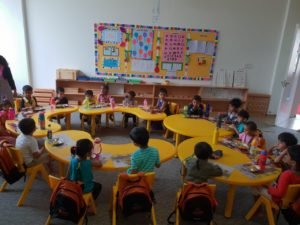
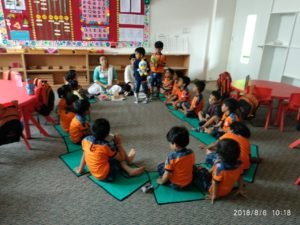
Children benefit when classrooms allow them to communicate ideas, ask questions and participate confidently.
Parents should observe whether students appear comfortable interacting with teachers and whether quieter children also receive opportunities to contribute.
A supportive classroom environment can be particularly important for children who need additional encouragement or learn at a different pace.
5. Check Whether Learning Extends Beyond Textbooks
Modern education should help students understand how classroom concepts connect with real situations.
Experiments, projects, discussions, presentations and collaborative activities can help students develop problem-solving and communication skills alongside academic knowledge.
Skalvi highlights approaches such as practical learning, integrated projects and student participation through its Top 10 Reasons.
Parents should ask how these methods are used in their child’s specific grade rather than assuming every activity applies equally across the school.
6. Consider Student Support
Parents should understand what happens when a student struggles academically, socially or emotionally.
Useful questions include:
→ How do teachers identify learning gaps?
→ How is additional academic support provided?
→ How are parents informed about progress?
→ Is individual attention available when required?
→ How does the school support student wellbeing?
These factors can be as important as examination performance when assessing long-term suitability.
7. Evaluate Activities Alongside Academics
A balanced school environment should provide opportunities for children to develop beyond textbooks.
Sports, music, visual arts, theatre and other activities can support confidence, creativity, teamwork and physical fitness.
However, parents should check whether activities are regular, age-appropriate and balanced with academic responsibilities.
8. Think About Long-Term Continuity
Basavanagudi families considering a JP Nagar school may also want to know whether the institution can support the child through future academic stages.
Skalvi’s published academic programmes extend through Grade 12. This can be useful for parents who prefer continuity rather than changing schools frequently.
For senior-secondary students, families should confirm current subject options and grade-specific admission requirements directly with the school.
9. Visit the Campus Before Deciding
A campus visit gives parents information that online searches cannot fully provide.
Observe:
→ Teacher-student interaction
→ Classroom organisation
→ Student participation
→ Safety and cleanliness
→ Activity areas
→ Learning spaces
→ Overall atmosphere
A school may look impressive online, but the child’s comfort and the quality of everyday learning should carry greater weight.
10. Choose the Better Fit, Not Just the Nearest Option
For Basavanagudi parents, the final question should not simply be, “Which school is closest?”
A better question is:
“Which school can provide the learning environment, support and development my child needs while keeping the daily commute manageable?”
That approach helps parents make a more balanced decision.
Frequently Asked Questions
1. Can Basavanagudi families consider a school in JP Nagar?
Yes. Parents can consider JP Nagar schools when the commute is practical and the school suits the child’s learning needs.
2. Is Skalvi International School located in Basavanagudi?
No. Skalvi is located in Kothnur, JP Nagar 8th Phase, Bengaluru.
3. Is JP Nagar practical for Basavanagudi students?
It can be, depending on the exact home location, traffic conditions and transport arrangements.
4. What should Basavanagudi parents check first?
Start with the school’s exact location, travel time, curriculum and teaching approach.
5. How should parents compare schools near Basavanagudi?
Compare teaching quality, student support, activities, commute, academic continuity and learning environment.
6. Is the nearest school always the best option?
No. Convenience matters, but educational suitability should also be considered.
7. What should parents observe during a campus visit?
Observe teachers, classroom participation, student behaviour, cleanliness, safety and learning spaces.
8. Should parents check practical learning before admission?
Yes. Ask how projects, experiments, discussions and real-world applications are included in learning.
9. Does long-term grade availability matter?
Yes. It can be useful for families who prefer continuity through secondary and senior-secondary education.
10. How can parents decide whether a JP Nagar school is right for their child?
Balance academic quality, child comfort, student support, activities and the daily commute.