Think back to your school days. What stands out most vividly? Was it solving a challenging math problem, the thrill of a debate competition, the camaraderie of a sports team, or the joy of a school play? For many, it’s the latter – the moments spent outside the traditional classroom, engaging in activities that ignite passion, build friendships, and teach lessons far beyond textbooks. This is exactly why parents searching for the best secondary schools near me prioritize institutions that offer strong co-curricular programs alongside academics.
In today’s fast-paced world, preparing students for the future means equipping them with more than just academic knowledge. It’s about nurturing their character, honing their soft skills, and helping them discover their unique talents. This is where robust co-curricular programs at private schools near me shine, acting as a powerful complement to classroom learning.
The Unsung Heroes of Education: Understanding Co-Curricular Activities
When people think of education, the first image that comes to mind is a classroom filled with desks, a teacher, and textbooks. While academics are essential, education’s true essence extends much further. Co-curricular activities are organized learning experiences that complement and enrich the academic curriculum.
These activities are not just “extras” – they are integral to a school’s mission, fostering intellectual, social, emotional, and physical development. They provide a hands-on arena where students can apply classroom knowledge and explore new skills in real-life scenarios.
Defining the Scope: What Falls Under Co-Curriculars?
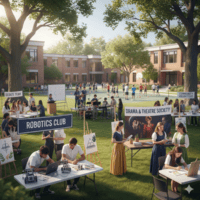
Co-curricular activities span a wide range, reflecting the diverse interests of students. At the best high schools near me, these programs typically include:
- Academic & Literary Clubs: Debate clubs, science fairs, robotics, coding clubs, literary societies, quiz teams.
- Arts & Culture: Drama productions, school bands or choirs, art clubs, photography groups, cultural societies.
- Sports & Fitness: Inter-school teams (football, basketball, athletics), yoga, fitness clubs.
- Community & Service: Volunteering groups, environmental clubs, student government, peer mentoring programs.
- Skills-Based Workshops: Public speaking, creative writing, entrepreneurship clubs.
Each activity offers unique growth opportunities, pushing students beyond their comfort zones and encouraging self-discovery.
Co-Curricular vs Extracurricular: A Key Difference
Although the terms are often used interchangeably, there’s a subtle distinction. Extracurriculars are usually recreational and may not tie directly to academics. Co-curricular activities, however, align with the curriculum, reinforcing learning and promoting holistic development.
Key Skills Developed Through Co-Curricular Activities for Students
The true power of co-curricular activities lies in cultivating essential life skills, often difficult to teach in a classroom. Students in the best secondary schools near me gain these skills naturally:
- Leadership and Teamwork: Leading a project, captaining a sports team, or serving on student council teaches responsibility, delegation, and collaboration.
- Communication and Public Speaking: Debates, drama productions, and science presentations enhance clarity, persuasion, and confidence in expressing ideas.
- Critical Thinking and Problem-Solving: Robotics, chess clubs, and literary discussions foster analysis, strategy, and creative solutions.
- Time Management and Discipline: Balancing academics with activities teaches prioritization, scheduling, and self-discipline.
- Creativity and Innovation: Art, music, creative writing, and engineering challenges encourage original thinking and experimentation.
- Emotional Intelligence and Resilience: Sports, group projects, and performances teach empathy, conflict resolution, and bouncing back from setbacks.
Long-Term Impact: How Co-Curricular Activities Shape Futures
Participation in co-curricular activities benefits students far beyond school:
- Boosting Academic Performance: Engaging in clubs or sports can relieve stress and enhance focus, making classroom learning more effective.
- Enhancing College and Career Prospects: Colleges and employers value well-rounded students who demonstrate leadership, initiative, and diverse skills.
- Fostering Personal Well-being and Identity: Co-curriculars allow students to explore interests, build confidence, and develop social connections critical for mental and emotional health.
Choosing the Right Co-Curricular Activities for Students
Selecting activities requires balance and thoughtfulness:
- Align with Interests and Strengths: Students thrive when their activities resonate with their passions and talents.
- Balance Academics and Activities: Quality of involvement matters more than quantity. Overcommitment can harm well-being.
- Encourage Exploration, Not Pressure: Trying new activities helps students discover hidden talents and learn valuable lessons, even if the interest is short-term.
Conclusion: The Holistic Advantage
In essence, co-curricular activities at private schools near me and the best high schools near me are not optional extras, they are essential for holistic development. By nurturing leadership, communication, critical thinking, creativity, and resilience, these programs prepare students not just academically but for life. Investing in vibrant co-curricular opportunities is an investment in a brighter, well-rounded future for every student.