In the relentless pursuit of academic excellence, often fueled by the competitive environment surrounding admissions to top institutions, parents and children alike can lose sight of a fundamental component of healthy development: dedicated time for hobbies and personal interests. The pressure to excel in board examinations, particularly in high-stakes curriculums offered by ICSE schools in Bangalore or rigorous CBSE schools in Bangalore, sometimes leads to a schedule packed tight with tuitions and academic coaching. However, a child’s overall well-being, their mental health, emotional intelligence, and resilience, thrives on the balance provided by activities chosen purely for joy and self-expression.
This blog explores why carving out “Happy Hobby Hours” is not a luxury, but a necessity, and how some of the most respected educational institutions, including famous international schools in Bangalore, are actively integrating this philosophy into their holistic educational models.
Beyond the Textbook: Hobbies as Stress Relief and Mental Health Boosters
The academic pressure cooker can take a significant toll on a child’s mental health. Homework, projects, and the constant cycle of assessments create a breeding ground for stress and anxiety. Hobbies serve as a vital emotional outlet, offering a healthy and engaging way for children to unwind and detach from academic demands.
- Reducing Cortisol Levels: Engaging in enjoyable activities like painting, playing a musical instrument, or gardening has been scientifically linked to lowering levels of cortisol, the body’s primary stress hormone. This mental pause is crucial for a child’s developing brain.
- Boosting Mood and Happiness: Hobbies release ‘feel-good’ chemicals like dopamine. The satisfaction of completing a challenging art project or mastering a new move in a martial art class provides a powerful sense of accomplishment and purpose, significantly boosting self-esteem and overall mood. This dedicated, non-academic pursuit allows them to experience success on their own terms, independent of a grade card.
- A Sense of Identity: In a world where academic labels can sometimes define a child, a hobby allows them to explore their individuality. Whether it is through robotics, debating, or theatre, a child discovers their unique talents and passions, fostering a strong sense of identity. This exploration is equally valued in modern education, a philosophy often championed by famous international schools in Bangalore that prioritize self-directed learning and personal growth.
Cultivating Essential Life Skills
The skills learned during hobby time are often the most transferable and valuable in life, far beyond the classroom. These activities are miniature real-world training grounds.
- Time Management and Discipline: Juggling schoolwork and a passion like basketball or learning a new language teaches invaluable time management skills. Children learn to prioritize, stick to a schedule, and commit to a routine. The discipline required to practice a difficult piece on the piano, for example, directly translates into the discipline needed for sustained academic focus. This balance is explicitly fostered by well-regarded educational systems, where schools under the CBSE schools in Bangalore banner often boast extensive sports and co-curricular programs designed to teach this essential life skill.
- Problem-Solving and Creativity: Hobbies like coding, building models, or even creative writing challenge children to think outside the box. They encourage experimentation and risk-taking without the fear of failure typically associated with academic assessment. They learn to analyze, improvise, and connect disparate ideas—skills vital for the 21st-century global citizen.
- Resilience and Perseverance: Learning a new skill is rarely a straight path; it involves setbacks, plateaus, and moments of frustration. Overcoming the initial difficulty of a new technique in pottery or bouncing back from a loss in a chess tournament teaches resilience and perseverance. This ability to ‘stay the course’ is a cornerstone of character development and is a key focus of many top-tier ICSE schools in Bangalore that emphasize all-round personality development.
The Social and Emotional Dimension
Hobby groups, clubs, and teams are powerful conduits for social and emotional development. They pull children out of their individual bubbles and place them in supportive, collaborative communities.
- Building Social Skills: Participating in a drama club, a band, or a sports team requires communication, negotiation, and cooperation. Children learn to interact with peers who share a common, non-academic interest, leading to the formation of deeper, more meaningful friendships. They learn active listening, sharing feedback, and respectful interaction—foundational skills for effective teamwork.
- Fostering Empathy: Extracurricular activities bring together students from various backgrounds and academic levels, teaching tolerance and respect for diverse perspectives. Collaborating to put on a school play or working towards a shared goal in a debate club naturally fosters empathy and emotional intelligence.
- Leadership Development: Whether it is captaining the school football team or leading a segment of a community service club, hobbies provide organic opportunities for students to step into leadership roles. They learn responsibility, how to motivate others, and how to manage group dynamics, preparing them for future roles in the professional world. This focus on leadership is a highlight of the curriculum at many famous international schools in Bangalore, which aim to groom future global leaders.
The Role of Top Schools in Nurturing Interests
Recognizing the indispensable link between hobbies and holistic development, the educational landscape in metropolitan cities like Bangalore has evolved significantly. Parents today actively seek schools that offer a balanced ecosystem, not just rigorous academics.
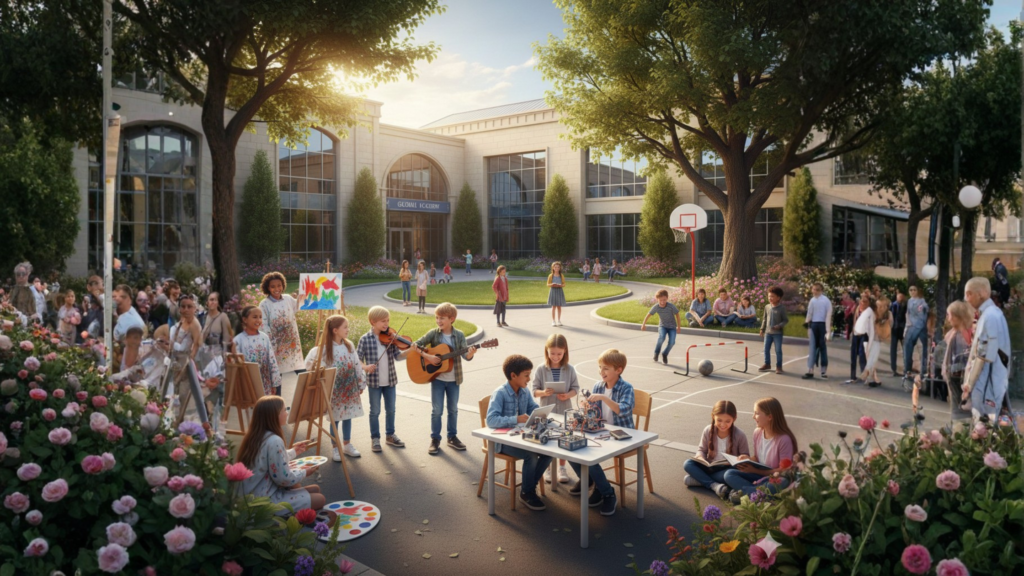
Famous international schools in Bangalore often lead the way, boasting state-of-the-art infrastructure dedicated to co-curricular activities, including professional-grade art studios, expansive sports complexes, and specialized labs for robotics and innovation. Their curriculum structure frequently integrates dedicated periods for “Activity” or “Passion Projects,” ensuring that hobby time is formally protected and valued as much as classroom time.
Similarly, many of the leading ICSE schools in Bangalore and CBSE schools in Bangalore are moving beyond traditional extracurriculars. They are integrating robotics, design thinking, entrepreneurship clubs, and various forms of fine and performing arts directly into the weekly timetable. Institutions affiliated with these boards now understand that a child who is happy, engaged, and well-rounded is ultimately a better learner. They create an environment where a student’s success in a debate competition or a regional swimming championship is celebrated with the same fervor as their academic achievements.
The commitment of these institutions to a well-rounded education ensures that children don’t have to choose between their report card and their passion. Instead, they are encouraged to view their diverse interests as complementary components of a rich and fulfilling educational journey.
Practical Steps for Parents
Creating Happy Hobby Hours requires intentionality from both parents and children.
- Observe and Encourage: The best hobbies are those the child genuinely loves. Pay attention to what your child naturally gravitates towards—be it sketching, building Lego, or talking about astronomy—and provide resources and opportunities for them to explore it deeper.
- Protect the Time: Treat hobby time as non-negotiable, just like academic classes. Guard this time against the creep of extra tuitions or other demands. Even thirty minutes of focused, joyful activity a few times a week can make a significant difference.
- Focus on the Process, Not the Outcome: The goal of a hobby is not to produce a prodigy or a state-level champion, but to enjoy the process, learn a new skill, and de-stress. Celebrate effort and perseverance over flawless results.
- Model the Behavior: Children learn by example. When parents demonstrate a commitment to their own hobbies and well-being, it validates the importance of this time for the child.
Conclusion
Dedicated time for hobbies is the bedrock of a well-adjusted, confident, and emotionally intelligent child. It is the crucial ingredient that transforms a high-achieving student into a resilient, creative, and happy individual ready to navigate the complexities of life. Whether a child attends one of the famous international schools in Bangalore with its vast options, a nurturing program at an ICSE schools in Bangalore institution, or a comprehensive curriculum at one of the CBSE schools in Bangalore campuses, the responsibility remains on the parents and the school to foster this essential balance. By prioritizing “Happy Hobby Hours,” we are investing not just in their development, but in their lifelong happiness and well-being.