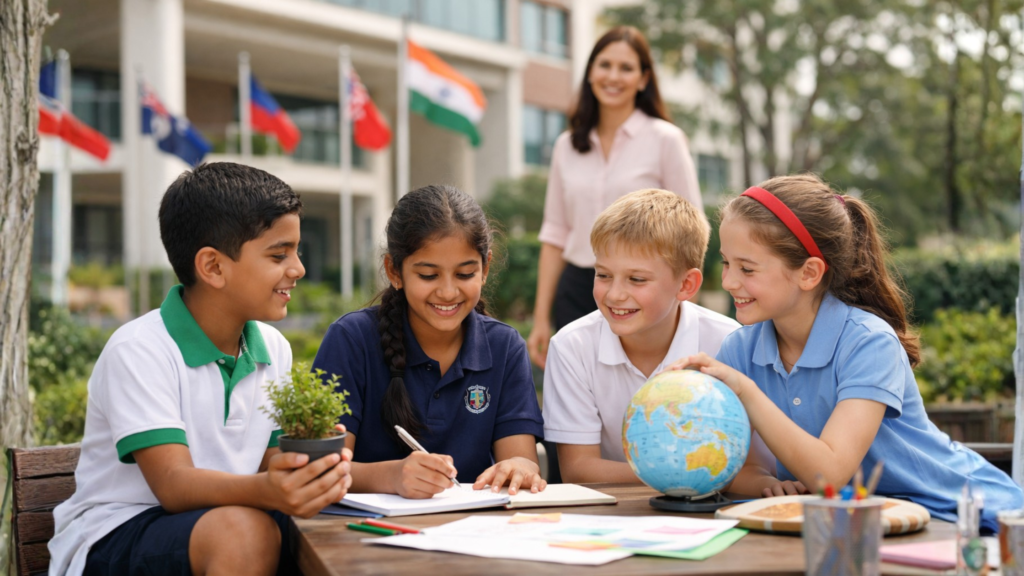
At its core, experiential learning is the process of learning through doing. It bridges the gap between theoretical knowledge and practical application. Whether it is coding a first app, building a physical structure to understand physics, or engaging in debate to learn civics, the objective is the same: to foster deep understanding through direct experience. Platforms like SKALVI are at the forefront of this educational revolution, providing the tools and frameworks necessary to turn daily lessons into profound discoveries.
Defining the ‘Eureka Moment’ in Modern Education
For decades, the standard model of education focused on information transfer. The teacher spoke, and the student listened. While this method serves a purpose, it often fails to ignite the creative spark necessary for complex problem-solving. The “Eureka moment” is not just a feeling of satisfaction; it is a neurochemical event where connections in the brain are solidified. When we prioritize experiential learning for student creativity, we are essentially designing a curriculum that manufactures these moments on a regular basis.
The Shift from Rote Memorization
Rote memorization asks a student to remember what happens. Experiential learning asks them to discover why and how it happens. When a student memorizes the formula for velocity, they possess data. When a student builds a race car and adjusts the weight to make it go faster, they possess wisdom. This shift is crucial because creativity does not stem from a database of facts; it stems from the ability to manipulate those facts to create something new.
The Core Benefits of Hands-On Learning
Why is getting messy, building models, or writing code so much more effective than reading a chapter? The hands-on learning benefits are well-documented in educational psychology. Engaging multiple senses—touch, sight, and hearing—simultaneously creates stronger neural pathways.
When students physically manipulate objects or actively engage in a process, they are not just observers; they are participants. This participation leads to:
- Higher Retention Rates: Studies suggest that learners retain significantly more information when they practice doing the task compared to just hearing about it.
- Increased Motivation: The immediate feedback loop of hands-on tasks keeps students engaged and hungry for the next challenge.
- Critical Thinking Development: Physical tasks often present unexpected variables, forcing students to think on their feet.
Project-Based Learning for Kids: A Catalyst for Innovation
One of the most effective vehicles for experiential learning is project-based learning (PBL). Project-based learning for kids involves a dynamic classroom approach in which students acquire a deeper knowledge through active exploration of real-world challenges and problems.
Instead of writing an essay on environmental science, students might design a water filtration system for a local stream. This approach does more than teach science; it teaches agency. Students learn that their creativity has power and that their ideas can impact the world around them. This connects directly to the mission of organizations like SKALVI, which empower young minds to transcend standard learning boundaries through immersive experiences.
Fostering Collaboration and Resilience
Creativity is rarely a solitary endeavor. Project-based learning inherently requires collaboration. Students must negotiate, share ideas, and combine their strengths to succeed. Furthermore, projects often fail before they succeed. In a safe, experiential environment, failure is re-framed as data. This builds resilience—a critical component of the creative process. Without the fear of the “wrong answer” on a multiple-choice test, students are free to take the creative risks that lead to breakthroughs.
Implementing a Creative Problem Solving Curriculum
To truly harness the power of experiential learning, educators and parents must look toward a creative problem solving curriculum. This type of curriculum is designed not around answers, but around questions. It utilizes discovery-based education techniques where the instructor acts more as a guide than a lecturer.
Key elements of this curriculum include:
- Open-Ended Challenges: presenting problems that have multiple valid solutions.
- Reflective Practice: Encouraging students to look back at their process to understand what worked and what didn’t.
- Interdisciplinary Connections: Showing how art connects to math, or how history connects to technology.
By integrating these elements, we prepare students for a future that is undefined. The jobs of tomorrow will require cognitive flexibility and the ability to synthesize information from various sources to solve novel problems. Experiential learning is the training ground for these future leaders.
Conclusion: Making Creativity a Daily Habit
The power of experiential learning lies in its ability to transform education from a chore into an adventure. By prioritizing experiential learning for student creativity, we do more than just improve test scores; we build character, resilience, and a lifelong love for discovery. From the hands-on learning benefits of retention to the collaborative nature of project-based learning for kids, the evidence is clear: we learn best when we live the lesson.
As we look to the future, it is imperative that we support platforms and methodologies that champion this approach. Every child deserves the opportunity to have their own “Eureka moments” every single day. It is time to move beyond the textbook and into the world of limitless possibility.