The National Education Policy (NEP) 2020 marks a watershed moment in India’s educational landscape, fundamentally reshaping the approach to learning from early childhood to higher education. It champions a shift from rote learning to a holistic, multidisciplinary, and skill-based education system. In the vibrant educational hub of Bangalore, institutions are swiftly adapting to this visionary framework. Among the schools leading this transformation is Skalvi International School, a prominent institution committed to not just adopting but embodying the spirit of the NEP to nurture the next generation of global citizens with an Indian heart.
This commitment is particularly vital for institutions like Skalvi, which serves a diverse student body, including those looking for high-quality residential schools in Bangalore, as well as local day scholars. Skalvi’s proactive implementation strategy provides a compelling blueprint for how progressive schools are future-proofing their curriculum and pedagogy.
The Foundational Stage: Nurturing the Youngest Minds
The NEP 2020 introduces the 5+3+3+4 curricular structure, placing an unprecedented emphasis on the Foundational Stage (Ages 3-8, covering Bal Vatika/Pre-school to Grade 2). This stage is the bedrock of lifelong learning, focusing on Early Childhood Care and Education (ECCE).
Skalvi International has embraced this by redefining its pre-primary and primary sections, which are easily accessible to families seeking quality primary schools in JP Nagar and the surrounding areas.
1. Play-Based and Experiential Learning
Skalvi’s philosophy, “Learning is a product of experience and thoughtful reflection,” aligns perfectly with the NEP’s call for play-based, activity-based, and discovery-based learning in the foundational years.
- Bal Vatika (Foundational Years): This program for pre-primary to Grade 2 is not confined to textbooks. It integrates scientifically crafted games, music, theatre, and art & craft into the daily routine. The objective is to make learning a joyful experience, focusing on developing essential skills like communication, social interaction, and emotional intelligence through engagement.
- “Knowing by Doing”: This Skalvi principle ensures hands-on experience and the creation of ‘Eureka moments’ that build conceptual understanding rather than simple memorization. The emphasis is on the developmental domains of the child—physical, socio-emotional, ethical, cognitive, language, and aesthetic development.
2. Foundational Literacy and Numeracy (FLN)
A core goal of the NEP is for every child to achieve FLN by Grade 3. Skalvi addresses this through:
- Early Intervention: For the younger students, particularly in the foundational and preparatory stages, associate teachers work alongside class teachers to provide individual attention and bridge any learning gaps, ensuring every child is brought up to par with their respective grade level.
- Multilingual Focus: In line with the NEP’s recommendation to use the mother tongue/regional language as the medium of instruction till at least Grade 5, Skalvi integrates a love for language through storytelling, conversations, and exposure to various forms of communication, respecting the linguistic diversity of its student body.
Restructuring the Preparatory and Middle Stages
The shift in the curriculum extends into the Preparatory (Grades 3-5) and Middle (Grades 6-8) stages, which demand a multidisciplinary approach and the introduction of critical 21st-century skills.
3. Interdisciplinary Curriculum and Vocational Integration
The NEP mandates the elimination of “hard separations” between arts and sciences, and between curricular and extracurricular activities. Skalvi International is implementing this through:
- Integrated Term Projects: Students are encouraged to present their learning outcomes through diverse formats—presentations, role plays, skits, quizzes, and impromptu debates—blending subject knowledge with performance and communication skills.
- Vocational Exposure (Middle Years): For students in the Middle Stage (Grades 6-8), the focus shifts to developing scientific temper and practical skills. The curriculum includes problem-solving, formulating alternative solutions, and implementing optimal solutions. Furthermore, the mandatory introduction of vocational skills, as envisioned by the NEP, is being woven into the curriculum to expose students to various career paths early on.
4. Holistic Development and Attitude Building
Skalvi’s core values—known as the 3C (Cleanliness, Compassion, Commitment), 3D (Determination, Discipline, Devotion), and 3R (Respect, Responsibility, Reliability)—directly support the NEP’s focus on ethical and constitutional values.
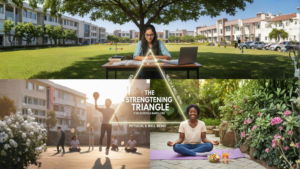
- Beyond Academics: Skalvi believes that success is driven by 88% right attitude and only 12% education. The school’s unique pedagogy introduces, grooms, and nurtures the right habits from an early age. The strengthening triangle bond between Academics, Health, and Physical Activities ensures holistic student development.
- Happy Hobby Hours: The integration of “Happy Hobby Hours” with activities like theatre, music, visual arts, football, cricket, basketball, gymnastics, and karate is a prime example of the NEP’s promotion of multidisciplinary education and the inclusion of sports and arts as integral parts of the curriculum.
Secondary and Senior Secondary Reforms
The final 4-year phase (Grades 9-12) under NEP requires a flexible and multidisciplinary approach, allowing students to choose subjects based on their interests rather than rigid streams.
5. Flexibility and Critical Thinking
In the Secondary Years, the Skalvi program focuses on greater depth, critical thinking, and a greater attention to life aspirations, coupled with increased flexibility in subject choice.
- Depth over Breadth: The curriculum emphasizes conceptual understanding over rote learning and prepares students for a multidisciplinary world. The subject-oriented pedagogical style is maintained but is enriched with opportunities for students to explore their interests.
- Assessment for Learning (PARAKH Alignment): While specific details on the new board exam structure (as proposed by PARAKH, the National Assessment Centre) are awaited, Skalvi’s continuous focus on regular feedback and curative methods ensures that students are constantly assessed for holistic development, moving beyond summative assessment towards formative evaluation.
Skalvi International: A Model Institution in Bangalore
Skalvi’s successful transition into an NEP-compliant institution provides a benchmark for other schools, including major players like Bangalore International Academy. Located in a well-connected part of the city, Skalvi International, along with other top-tier residential schools in Bangalore, is meeting the rising parental demand for an education that prepares children for the complexities of the 21st century.
Teacher Empowerment
The NEP places the teacher at the center of the reform. Skalvi supports its educators by maintaining a favorable teacher-student ratio of 1:24 (and an even better 1:2.6 in Bal Kendra), which ensures personalized attention—a cornerstone of the NEP’s vision for quality and equitable education. The U-shaped seating arrangement in classrooms further ensures equal and undivided attention for every child.
Infrastructure and Environment
A school’s environment plays a critical role in holistic learning. Skalvi’s facilities are designed to be safe and stimulating, providing the appropriate physical infrastructure and resources conducive to learning, which is a key aspiration of the NEP for all education institutions.
Conclusion: Empowering Futures
Skalvi International School’s comprehensive and intentional implementation of the National Education Policy 2020 demonstrates a powerful commitment to transforming education. By prioritizing experiential learning, holistic development, skill integration, and a flexible curriculum across all stages—from the early years programs sought by families in primary schools in JP Nagar to the advanced secondary stage—Skalvi is ensuring that its students are not just academically proficient but are also equipped with the knowledge, attitude, and virtuosity to thrive in a dynamic world.
The school’s motto, “Empowering Minds, Nurturing Futures: Beyond Academics, Embracing Lifelong Learning,” is not just a phrase; it is the living embodiment of the NEP’s highest ideals, positioning Skalvi International as a leader in educational innovation in Bangalore.