Parents and educators are now facing a pivotal question: Is a report card full of A’s truly a predictor of success, or is it merely a measure of compliance? To answer this, we must examine the benefits of holistic education vs traditional schooling to understand where the real Return on Investment (ROI) lies for the next generation.
The Declining Value of the Report Card
In the past, high marks were a reliable signal of a candidate’s diligence and intelligence. Today, with grade inflation on the rise and information instantly accessible via smartphones, the ability to recall facts is no longer a competitive advantage. Employers in 2026 are not looking for walking encyclopedias; they are looking for innovators.
Why 99% Isn’t Enough Anymore
Consider the modern workplace. A student who scores 99% on a standardized test has proven they can follow instructions and retain information. However, when faced with a complex, ambiguous problem—such as navigating a supply chain crisis or mediating a conflict between remote teams—standardized testing offers no preparation. This disconnect highlights the urgency for future-ready education that prioritizes capability over memorization.
Defining the Shift: Benefits of Holistic Education vs Traditional Schooling
To understand the ROI, we must clearly distinguish between the two prevailing educational philosophies. The difference isn’t just in the curriculum; it is in the outcome.
The Traditional Model: A Factory Line Approach
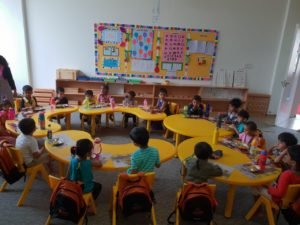
Traditional schooling was designed for the industrial age. It focuses heavily on:
- Standardization: One size fits all.
- Compartmentalization: Subjects are taught in silos (Math implies no relation to History).
- Passive Learning: Students listen; teachers lecture.
- External Validation: Motivation is driven by grades and rankings.
The Holistic Model: Cultivating the Whole Human
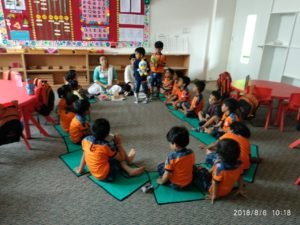
In contrast, the benefits of holistic education vs traditional schooling become evident when we look at the ‘whole child’ approach. Holistic education integrates physical, emotional, social, and cognitive growth. Key differentiators include:
- Personalization: Learning paths adapted to individual strengths.
- Interdisciplinary Learning: Understanding how science impacts art, and how history informs economics.
- Active Engagement: Learning through doing.
- Internal Motivation: Driven by curiosity and purpose.
The ROI here is clear: Holistic education produces adaptable, resilient individuals, whereas traditional schooling often produces compliant workers for jobs that may no longer exist.
The Currency of 2026: 21st Century Skills
If marks are the currency of the past, skills are the currency of the future. The World Economic Forum and other labor market analysts consistently highlight a specific set of 21st century skills that will define employability.
Critical Thinking Over Memorization
In a world of deep fakes and algorithmic bias, the ability to analyze information critically is paramount. Holistic education environments encourage debate, inquiry, and skepticism. Students aren’t just taught what to think, but how to think. This cognitive flexibility is a primary driver of long-term career success.
Soft Skills for Students: The Hardest Skills to Automate
Perhaps the most significant advantage of holistic learning is the focus on soft skills for students. While AI can write code and generate financial reports, it cannot replicate human empathy, leadership, or complex negotiation.
Holistic environments prioritize:
- Emotional Intelligence (EQ): Understanding oneself and others.
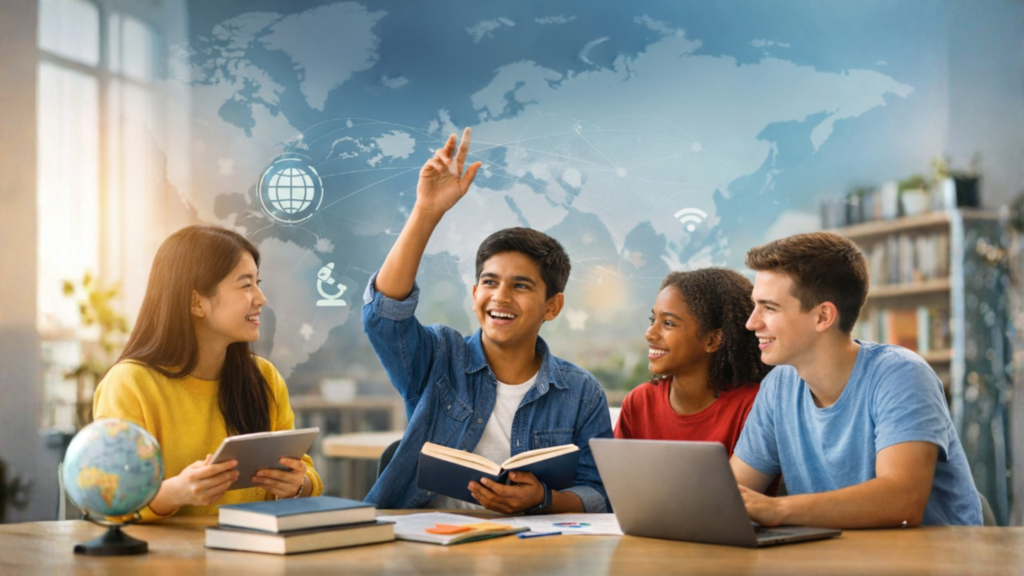
- Collaboration: Working effectively in diverse teams.
- Communication: Articulating complex ideas clearly.
These skills are often sidelined in traditional settings due to the pressure to cover syllabus content, yet they are the very skills that result in promotions and leadership roles in the workforce.
Experiential Learning Benefits: The Bridge to the Real World
Theory is useless without application. This is where experiential learning benefits shine. Experiential learning is the process of learning through reflection on doing. Instead of reading about aerodynamics, students build drones. Instead of memorizing business definitions, they run a micro-economy within the classroom.
The data supports this approach. Studies show that retention rates for experiential learning can be as high as 75%, compared to just 5% for traditional lecturing. Furthermore, students who engage in hands-on projects develop a portfolio of work, not just a transcript of grades. In the 2026 job market, a portfolio demonstrating capability is infinitely more valuable than a certificate demonstrating attendance.
Building Future-Ready Education with Skalvi
Transitioning from a traditional mindset to a holistic one can be challenging for parents and students alike. This is where modern educational platforms play a crucial role. Skalvi is at the forefront of this educational revolution, bridging the gap between academic requirements and real-world necessity.
By integrating cutting-edge technology with pedagogical best practices, Skalvi ensures that learning is engaging, relevant, and deeply effective. The platform focuses on unlocking potential rather than just correcting errors, ensuring that every learner is equipped with the resilience and adaptability required for the future.
Conclusion: Investing in Potential, Not Just Grades
When we analyze the benefits of holistic education vs traditional schooling, the conclusion is unavoidable: the traditional model is a depreciating asset. The ROI of holistic education extends far beyond the classroom. It manifests in higher lifetime earnings, greater job satisfaction, and the ability to navigate a volatile world with confidence.
As we look toward 2026, the goal of education should not be to create students who can answer every question on a test, but to create adults who can ask the right questions in life. It is time to shift our focus from marks to mastery, and from rote learning to real-world relevance.