‘Teach to Learn’ Method Achieves 90% Knowledge Retention
Peer-to-peer learning benefits center on the fact that students retain 90% of what they teach others. By shifting from passive listening to active explaining, children transition from information receivers to knowledge masters. This active learning pedagogy ensures deep comprehension, boosts social intelligence, and fosters a lifelong joy for discovery.
The 90% Retention Philosophy Explained
Information without application degrades rapidly. At Skalvi, our 90% retention philosophy utilizes the natural habit patterns of a child. Knowing by doing creates joyful, active learners. When a student explains a concept to a peer, they solidify their own grasp of the subject.
This framework forces active cognitive processing. Anything less reduces comprehension depth. By articulating knowledge, students move beyond rote memorization into high-level synthesis and evaluation.
Why Explaining Triggers Learning
- Cognitive Reinforcement: Structuring info to teach requires mental organization.
- Immediate Feedback: Peer questions highlight knowledge gaps instantly.
- Autonomy: Students take responsibility for their own understanding.
Core Peer-to-peer Learning Benefits
Our active learning pedagogy redefines the classroom. Students frame questions together and sort answers collaboratively. This method develops critical life skills beyond standard reading and writing through daily articulation and impromptu debates.
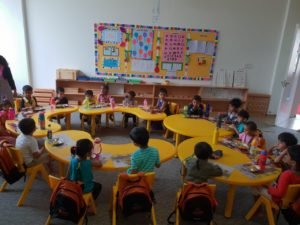
Social intelligence grows by navigating peer feedback and cooperative tasks. Problem-solving accelerates as students evaluate multiple alternative solutions together in our unique U-shaped classrooms, designed specifically to facilitate face-to-face interaction.
Technical Breakdown: The Protégé Effect in Schools
The protégé effect in schools is a psychological phenomenon where individuals learn better when expecting to teach others. This expectation shifts the mindset from acquiring facts to mastering concepts. It forms the foundation of experiential learning at Skalvi.
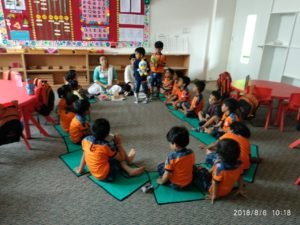
In our interactive environments, teachers operate as facilitators. This spatial arrangement removes the traditional front-to-back hierarchy, making schooling visible, examined, and celebrated as a powerful pathway for student-led growth.
Implementing Active Learning Pedagogy
Foundational years at Skalvi introduce collaborative play. Children develop emotional intelligence and the ability to work cooperatively. Early tasks foster a sense of autonomy and self-expression through child-led inquiry.
Middle and secondary years deepen this framework. Students develop a scientific temper and evidence-based thinking. Peer presentations and role plays replace conventional monologues, ensuring every student is an active participant in their education.
Life Beyond Academics: A Holistic Ecosystem
Retention relies on a balanced mind. Our mandatory daily Happy Hobby Hours integrate physical and creative pursuits like visual arts, sports, and theatre. This balance directly supports cognitive function and overall well-being.
Healthy eating fuels better learning. Our nutritious food standards ensure children have the energy required for high-participation environments. Every element of the Skalvi day supports active engagement and sustained curiosity.
Frequently Asked Questions
What are the primary peer-to-peer learning benefits?
Peer-to-peer learning increases knowledge retention to 90%, develops critical thinking, and builds communication skills. Students process information deeper when required to explain concepts to classmates, transforming them into active learners.
How does active learning pedagogy differ from traditional methods?
Active learning pedagogy requires students to participate, frame questions, and solve problems collaboratively. It eliminates passive information receiving, fostering self-motivation and a genuine joy for discovery through doing.
What is the protégé effect in schools?
The protégé effect occurs when students learn material with the intent to teach it to others. This expectation increases focus, improves organization of knowledge, and leads to significantly higher retention rates compared to standard studying.