Education today is evolving to focus more on how children learn rather than simply what they learn. One of the most effective approaches adopted in many schools is student-centered learning. This approach places students at the heart of the learning process, encouraging them to actively participate, explore ideas, and develop understanding through interaction and experience.
Instead of relying only on lectures, student-centered learning encourages children to think independently, ask questions, and take responsibility for their own learning journey.
What Is Student-Centered Learning?
Student-centered learning is an educational approach where students actively participate in the learning process rather than only listening to instructions. Teachers guide discussions, encourage curiosity, and support students in discovering knowledge through exploration and collaboration.
In this approach, classrooms often include activities such as discussions, group work, projects, and problem-solving tasks that help students understand concepts more deeply.
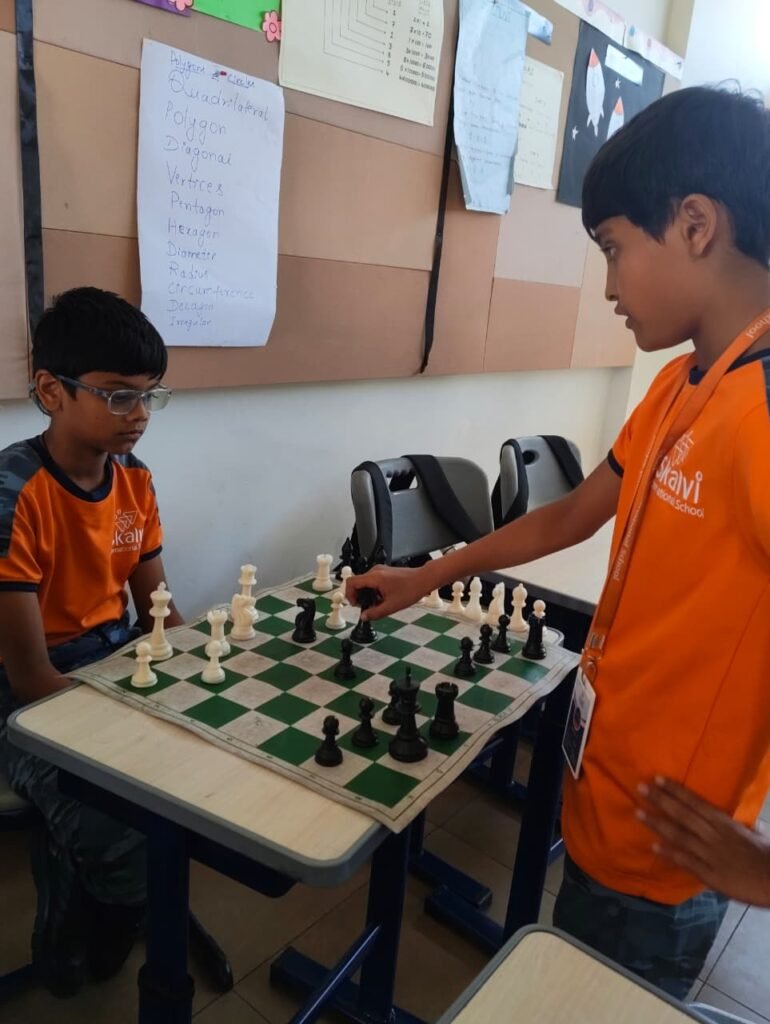
At Skalvi International School, the learning environment encourages students to think, ask questions, and search for answers together, helping them become active participants in their own education.
Key Features of Student-Centered Learning
1. Active Participation
Students are encouraged to participate in discussions, activities, and collaborative tasks. This involvement helps them understand lessons through experience rather than passive listening.
2. Question-Based Learning
Children are encouraged to ask questions and explore ideas. Asking questions allows students to think critically and gain a deeper understanding of subjects.
3. Learning Through Exploration
Students learn by exploring concepts through activities, projects, and practical experiences. This helps them connect theoretical knowledge with real-world situations.
4. Teacher as a Guide
Teachers support and guide students through the learning process rather than only delivering information. This approach allows students to develop independent thinking skills.
5. Collaborative Learning
Students often work together to solve problems and share ideas. Collaboration helps them develop communication skills and learn from different perspectives.
Benefits of Student-Centered Learning
Better Understanding of Concepts
Active participation allows students to understand ideas more clearly because they engage directly with the learning process.
Improved Confidence
When students express their thoughts and ideas in class, they develop confidence in sharing their perspectives.
Development of Critical Thinking
Encouraging questions and discussions helps students analyze information and develop logical reasoning.
Greater Responsibility for Learning
Students gradually learn to take ownership of their learning process, becoming more self-motivated and curious.
How Student-Centered Learning Works in the Classroom
A classroom built around student-centered learning typically includes interactive teaching methods. Teachers may organize group discussions, project-based activities, presentations, and collaborative tasks that allow students to explore subjects from different angles.
At Skalvi International School, classrooms are designed to encourage interaction between teachers and students. This helps create an environment where ideas are shared openly and learning becomes a collaborative experience.
Conclusion
Student-centered learning focuses on helping children become active learners who explore ideas, ask questions, and participate in meaningful discussions. By encouraging curiosity, collaboration, and independent thinking, this approach supports deeper understanding and long-term learning.
Schools that adopt student-centered learning create classrooms where students are engaged, motivated, and encouraged to discover knowledge through participation and exploration.
FAQ
What is student-centered learning?
Student-centered learning is an approach where students actively participate in the learning process through discussions, projects, and collaborative activities.
How is student-centered learning different from traditional teaching?
Traditional teaching focuses mainly on lectures, while student-centered learning encourages participation, exploration, and interaction in the classroom.
Why is student-centered learning important?
It helps students develop curiosity, critical thinking, and confidence while understanding concepts more effectively.
How do teachers support student-centered learning?
Teachers guide discussions, encourage questions, and create activities that allow students to explore ideas and learn through experience.