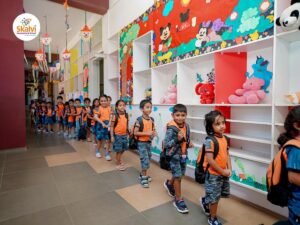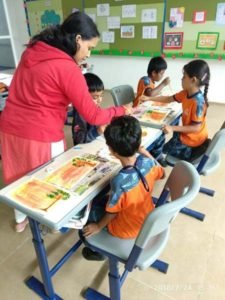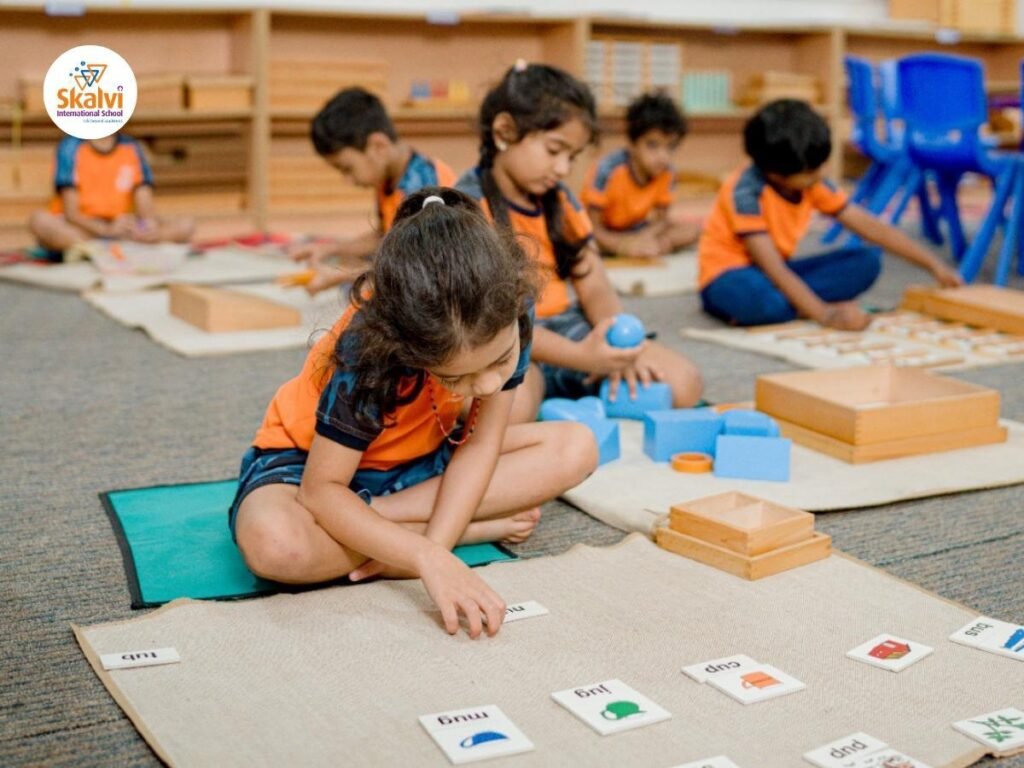
The years before Class 1 do far more than keep young children busy. Good foundational years education builds the language, thinking, social and physical skills that make the first formal year feel natural. This guide from the Skalvi International School CBSE school in JP Nagar explains what the Foundational Stage is, which skills it builds and how a smooth move from the early years to Grade 1 works in practice.
What You Will Learn
- What the Foundational Stage covers
- The key skills built before Class 1
- How the move from early years to Grade 1 works
- How parents can support the transition
Foundational Years Education: What the Stage Covers
Under the National Education Policy 2020, the Foundational Stage is the first part of school education. According to Deccan Herald’s report on the Ministry of Education’s letter to states, the Foundational Stage consists of five years of learning for children aged three to eight, including three years of pre-school and then Grade 1 and Grade 2. The table shows how this maps across the years.
| Year | Approx. age | Main focus |
|---|---|---|
| Pre-school year 1 | 3 to 4 | Settling, play, language and routines |
| Pre-school year 2 | 4 to 5 | Talking, listening, early number sense |
| Pre-school year 3 | 5 to 6 | School readiness, early reading and writing |
| Grade 1 | 6 to 7 | Reading, writing and number work through activity |
| Grade 2 | 7 to 8 | Building fluency and confidence |
Because Grade 1 and Grade 2 sit inside the same stage as pre-school, the move into Class 1 should feel like a gentle step, not a jump. At Skalvi, our Foundational Years cover Montessori 2, Montessori 3, Grade 1 and Grade 2, as our academic programmes page explains.
Early Years to Grade 1: The Skills That Matter Most
The early years build a broad base, not just letters and numbers. These are the areas that help most when Class 1 begins.
- Language and listening: speaking in full sentences, following simple instructions and enjoying stories.
- Early literacy: recognising sounds, handling books and making early marks and letters.
- Number sense: counting objects, comparing sizes and noticing patterns and shapes.
- Fine motor skills: holding a crayon, using scissors and building with blocks.
- Independence: managing a lunchbox, putting on shoes and using the toilet without help.
- Social skills: sharing, taking turns, joining group play and managing small frustrations.
These skills are linked. A child who can follow a two-step instruction finds it easier to join a group activity. A child who enjoys stories is more ready to connect sounds with letters. That is why good early-years teaching works on many skills at once, through play, songs, stories, building and art, rather than drilling one skill at a time.
Children develop these at different speeds, and that is normal. A good early-years programme notices where each child is and builds from there, rather than pushing every child to the same point at the same time.
How the Move to Grade 1 Works in Practice
A smooth transition depends on continuity. When the teaching style, routines and expectations carry over from the final pre-school year into Grade 1, children settle faster and keep their love of learning. Sudden changes, such as long hours at a desk or heavy written work, can unsettle a six-year-old.
In practice, the first weeks of Grade 1 often look familiar. Children still learn through stories, songs, games and hands-on materials, but with a little more structure and a gradual build-up of reading and writing. Teachers watch closely to see who needs more time and who is ready for more challenge.
Here is an example. A child moving from Montessori 3 to Grade 1 in the same school already knows the building, the routines and some of the teachers. On day one, the class starts with a story circle, just like the year before. Within a few weeks, the child is reading simple words and writing short sentences, without feeling that anything dramatic has changed.
Parents can support this at home in simple ways. Read a story together each evening and talk about the pictures. Let your child help with small tasks, such as setting the table or sorting socks, which build counting and matching. Encourage them to manage their own shoes and lunchbox. Talk about Grade 1 as an exciting step, and visit the classroom together if the school allows it.
Watch for signs that your child needs a little extra time, such as difficulty following instructions or strong upset at separating. Share these with the teacher early, so support can start from the first week rather than after a difficult month.
Our about us page explains our child-centric philosophy, which carries through every stage.
What Most People Overlook
We have found that parents measure readiness by how many letters a child knows, when independence and confidence matter just as much. A child who can manage their things and ask for help settles faster. Customers most often ask us whether staying in the same school from pre-school helps. Continuity usually makes the move to Grade 1 easier. Remember that play is serious learning at this age. Building, pretending, drawing and singing all develop the thinking, language and hand skills that Grade 1 builds on, so a playful early-years classroom is a strength, not a sign that children are falling behind.
How We Help Children Move Into Grade 1
Submit an admission enquiry or message our team on WhatsApp to see our Foundational Years. Our 10 reasons to choose Skalvi include a 1:15 teacher-student ratio in Montessori, U-shaped classrooms and “knowing by doing” activities that help children build skills naturally. You can choose a preferred campus tour date on our enquiry form to see a class in session.
Verdict
Foundational years education prepares a child for Class 1 by building language, number sense, motor skills, independence and social confidence through play. When the move into Grade 1 feels continuous, children settle faster. Visit the Skalvi International School website to see our Foundational Years.
FAQ
What is foundational years education?
It is the first stage of schooling under NEP 2020, covering ages three to eight, with three years of pre-school followed by Grade 1 and Grade 2.
Which skills do the foundational years build?
They build language, listening, early literacy, number sense, fine motor skills, independence and social skills such as sharing and taking turns.
Why are Grade 1 and Grade 2 part of the Foundational Stage?
Grouping them with pre-school keeps learning playful and continuous, so the move into formal schooling feels gradual rather than sudden.
How much should a child know before Grade 1?
There is no fixed list. Curiosity, listening, independence and comfort in a group matter more than knowing all letters and numbers.
Is play-based learning enough to prepare for Class 1?
Yes, when it is well planned. Play builds language, thinking, motor and social skills, which are the foundations of reading and number work.
Does staying in the same school help the move to Grade 1?
It often does. Familiar buildings, routines and teachers help children settle faster and keep their confidence as Grade 1 begins.
What does the first week of Grade 1 usually look like?
It often feels familiar, with stories, songs and hands-on activities, while reading, writing and number work build up gradually over the weeks.
Why do some children find the move to Grade 1 hard?
Sudden changes, such as long desk hours or heavy written work, can unsettle young children. A gradual approach usually prevents this.
How can parents support the move to Grade 1?
Read together daily, encourage small acts of independence, keep routines steady and talk positively about the new class before it starts.
Do children develop foundational skills at the same pace?
No. Children develop at different speeds, and good teachers build from where each child is rather than expecting the same pace from all.
Are fine motor skills important before Grade 1?
Yes. Holding a crayon, using scissors and building with blocks prepare the small hand muscles children use for writing in Grade 1.
Is independence part of school readiness?
Yes. Managing a lunchbox, shoes and toilet visits helps children feel confident and lets teachers focus on learning in class.
How are foundational years assessed?
Mostly through observation, activities and children’s work, rather than written tests, so teachers can plan the right support for each child.
Can I see Skalvi’s Foundational Years classrooms?
Yes. Choose a preferred campus tour date on our enquiry form to see our Montessori and Grade 1 classrooms in session.
How do I learn more about Skalvi’s Foundational Years?
Submit an admission enquiry online or message our team on WhatsApp, and we will explain how our early years lead into Grade 1.