As Class 1 approaches, many parents wonder whether their child is “ready”. Should they already read? Write their name? Count to a hundred? In reality, class 1 readiness is far broader and far gentler than a checklist of facts. This guide from the Skalvi International School CBSE school in JP Nagar explains what readiness really means, the skills that help most and how parents can build them at home without pressure.
What You Will Learn
- What school readiness for Class 1 really means
- The skills that help most in the first weeks
- How schools ease children into Class 1
- Simple ways to build readiness at home
Class 1 Readiness: What It Really Means
School readiness is not about finishing Class 1 work before Class 1 starts. National guidance recognises that children arrive from very different backgrounds. NCERT’s Vidya Pravesh guidelines set out a three-month play-based school preparation module for Grade 1 children, so that every child is helped to settle before the main curriculum begins. The table compares common worries with what actually helps.
| Common worry | What actually helps |
|---|---|
| Reading full books | Enjoying stories and recognising some sounds |
| Writing neat sentences | Holding a pencil and making marks with confidence |
| Counting to 100 | Counting objects and comparing “more” and “less” |
| Sitting still for hours | Following simple instructions and short routines |
| Knowing every answer | Asking for help and trying again |
Readiness is about being able to learn in a group, not having learned everything already. Our academics page explains how our Foundational Years build these skills step by step.
School Readiness for Class 1: The Skills That Help Most
These are the areas that make the first weeks of Class 1 feel easier for children and teachers.
- Listening and following instructions: understanding two- or three-step directions, such as “take your book and sit on the mat”.
- Talking and asking: saying what they need, asking questions and sharing simple ideas.
- Early sounds and stories: enjoying books, recognising some letters and sounds and retelling a short story.
- Early number sense: counting objects, recognising small numbers and noticing patterns.
- Hand skills: holding a pencil or crayon, colouring and using child-safe scissors.
- Self-care: opening a lunchbox, putting on shoes, washing hands and using the toilet.
- Getting along: sharing, taking turns and managing small disappointments.
Emotional readiness matters as much as these skills. A child who can say goodbye to a parent at the gate, cope when a game does not go their way and ask an adult for help is well placed to settle. These abilities grow with practice and patience, and they often matter more on the first day than anything a child has learned from a book.
No child needs to tick every box. Teachers expect a range, and most children grow quickly once Class 1 begins.
Building Readiness at Home Without Pressure
The best preparation happens through everyday life, not worksheets. Read together for a few minutes each day and talk about the pictures. Count steps, spoons or cars on the road. Let your child help with small tasks, such as laying the table or packing their bag. Play simple board games that involve taking turns and waiting.
Build independence gradually. Let your child practise opening their lunchbox, putting on their shoes and washing their hands. These small skills make a big difference on the first day, because a child who can manage their things feels confident and capable.
Here is an example. A parent worried that their child could not yet write full words. Over the summer, they focused on reading stories together, drawing, and letting the child pack their own bag. In the first month of Class 1, the child settled easily, and writing came naturally once the teacher started daily practice.
Sleep and routine also play a part. In the weeks before Class 1, move bedtime and wake-up time gradually towards the school schedule. A rested child copes much better with a new classroom, new adults and a longer day. Practise the morning routine a few times, from breakfast to getting ready, so the first school morning feels familiar rather than rushed.
If you can, visit the school together before the year starts. Seeing the classroom, the toilets and the play area helps a child picture where they will spend their day, which takes away much of the worry about the unknown.
Keep the tone positive. Talk about Class 1 as an exciting new step, and avoid phrases like “you’ll have to work hard now”. Values such as kindness and respect also help children get along in a new class, which is why our ethics, values and culture are part of every school day.
What Most People Overlook
We have found that parents push early writing but forget self-care skills, which matter just as much on day one. Customers most often ask us whether their child is behind if they cannot read yet. Usually not; reading is built during Class 1. Remember that confidence and curiosity grow when learning feels enjoyable, not stressful. A child who arrives in Class 1 excited to learn will usually catch up quickly on any skill they have not yet mastered, while a child who has been pushed too hard may start the year anxious.
How We Help Children Get Ready for Class 1
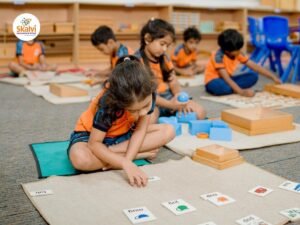
Submit an admission enquiry or message our team on WhatsApp to ask about Class 1 readiness. Once your child joins, our Parents Window keeps you updated. Primary students also have associate teachers who help each child reach their grade level at their own pace, and you can see a Grade 1 class in session on a campus tour.
Verdict
Class 1 readiness means a child can listen, talk, manage simple self-care, enjoy stories and numbers, and get along in a group. It does not require reading or writing fluently. Build it gently through daily life. Visit the Skalvi International School website to ask about Class 1 readiness for your child.
FAQ
What does Class 1 readiness mean?
It means a child can listen, talk, follow simple routines, manage basic self-care and enjoy learning in a group, not that they already know Class 1 work.
Should a child read before starting Class 1?
No. Reading is built during Class 1. Enjoying stories and recognising some sounds is a good starting point for most children.
Should a child write their name before Class 1?
It helps if they can, but it is not essential. Holding a pencil and making confident marks is more important at this stage.
What is Vidya Pravesh?
It is NCERT’s three-month play-based school preparation module for Grade 1, designed to help all children settle before the main curriculum.
Which self-care skills help in Class 1?
Opening a lunchbox, putting on shoes, washing hands and using the toilet independently help children feel confident from the first day.
How can parents build number sense at home?
Count everyday objects, compare “more” and “less”, spot shapes and play simple games with dice or cards that involve counting.
How can parents build listening skills?
Give simple two-step instructions, read stories aloud and ask your child to retell what happened, or play listening games like Simon Says.
Are worksheets useful before Class 1?
A few can be fun, but daily reading, talking, play and small tasks usually build readiness better than worksheets for young children.
What if my child is shy before Class 1?
Shyness is common. Arranging play with one or two other children and visiting the school beforehand can help your child feel more comfortable.
Is it normal for children to develop at different speeds?
Yes. Children vary widely at this age, and experienced teachers expect a wide range of skills when Class 1 begins.
How should parents talk about Class 1?
Describe it as an exciting new step. Avoid warnings about hard work, which can make children anxious before they start.
Should my child practise sitting still before Class 1?
Short, enjoyable activities such as puzzles or story time help. Long periods of sitting are not needed, as Class 1 still includes movement.
How long does it take a child to settle in Class 1?
Most children settle within the first few weeks, especially when the classroom feels familiar and the daily routines are clear.
Can my child visit a Skalvi Class 1 classroom?
Yes. Choose a preferred campus tour date on our enquiry form, and your child can see a Grade 1 classroom before joining.
How do I ask Skalvi about Class 1 readiness?
Submit an admission enquiry online or message our team on WhatsApp, and we will talk through your child’s readiness and next steps.