The first formal year of school is a big step. Children move from the freedom of pre-school to a day with more structure, new skills and new expectations. Good class 1 support makes that step feel safe and steady. This guide from the Skalvi International School CBSE school in JP Nagar explains what support in the first year of school should include, what national goals shape it and how parents can work with the school.
What You Will Learn
- What support children need in their first formal year
- The national goals behind foundational learning
- How classroom support works in practice
- How parents and schools can work together
Class 1 Support: What Children Need in the First Year
Class 1 support is about more than teaching letters and numbers. It covers settling in, building early reading and maths, and looking after each child’s wellbeing. National goals give this a clear direction. According to the Press Information Bureau’s release on NIPUN Bharat, the national mission aims to ensure that every child attains foundational literacy and numeracy by the end of Grade 3. The table shows the main areas of support.
| Support area | What it looks like | Why it matters |
|---|---|---|
| Settling in | Gentle routines and a warm welcome | Children learn best when they feel safe |
| Early reading | Sounds, stories and daily reading | Builds the base for all later learning |
| Early maths | Counting, patterns and hands-on number work | Develops reasoning and confidence |
| Extra adult help | Small groups or one-to-one time | Catches gaps early |
| Wellbeing | Breaks, play, meals and a trusted adult | Keeps energy and mood steady |
Because the goal is reached by the end of Grade 3, Class 1 is the start of a three-year journey, not a race. Our academics page explains how our Foundational and Preparatory Years build step by step.
First Year of School Support: How It Works in the Classroom
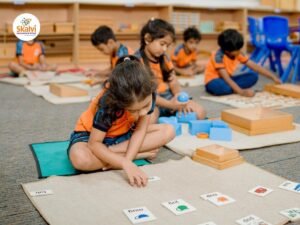
Support in Class 1 works best when it is built into the everyday classroom, not added only when a child falls behind. Here is what to look for.
- Small groups: teachers work with groups at different levels, so every child is stretched and supported.
- Extra adult support: a second adult in the room can give quick help to children who need more time.
- Regular observation: teachers watch how each child reads, counts and plays, and adjust their teaching.
- Hands-on learning: objects, games and activities make new ideas easier to grasp.
- Seating where every child is seen: layouts such as U-shaped seating help teachers notice each child.
- Balanced days: time for play, movement, art and meals keeps children fresh and engaged.
At Skalvi, primary students have associate teachers alongside the class teacher, to bring each child to their grade level. Our 10 reasons to choose Skalvi also include a 1:24 teacher-student ratio for Grades 1 to 10 and U-shaped classrooms.
How Parents and Schools Work Together
Children do best in Class 1 when home and school pull in the same direction. Teachers see how a child learns in class, and parents see how they feel at home. Sharing both views helps everyone respond quickly.
Start by sharing anything the teacher should know, such as allergies, sleep patterns, speech concerns or recent changes at home. Ask how and when the school will share progress in the first term. At home, keep routines steady, read together each day and listen to how your child talks about school.
Here is an example. In the second month of Class 1, a teacher notices that a child is struggling to blend sounds into words. She shares this with the parents and suggests a few minutes of reading aloud each evening. The associate teacher works with the child in a small group twice a week. By the end of the term, the child is reading simple sentences with confidence.
Homework in Class 1 should be light. Many schools focus on reading together, simple activities and talking about the day rather than long written tasks. If homework feels like a struggle every evening, mention it to the teacher. It may be a sign that a child needs a different kind of support, or simply that the routine at home needs adjusting.
Watch your child’s energy and mood too. The first term of Class 1 can be tiring, and a child who is often exhausted or upset after school may need an earlier bedtime, a calmer evening or a quiet word with the teacher. Small changes like these often make a big difference within a few weeks.
Celebrate effort, not just results. A child who feels proud of trying keeps going when learning gets harder. Our success stories show how children grow when they feel supported over time.
What Most People Overlook
We have found that parents wait for the report card to hear how their child is doing, when an early conversation helps far more. Customers most often ask us how quickly a teacher will notice if their child is struggling. With small groups and extra adult support, usually within the first few weeks. Remember that steady routines at home make support in school work better. Regular sleep, calm mornings and a few minutes of reading together each evening give teachers a strong base to build on, and they help children feel secure as the demands of the year grow.
How We Support Children in Class 1
Submit an admission enquiry or message our team on WhatsApp to meet our primary team. Our associate teachers, U-shaped classrooms and balance of scholastic and co-curricular activities help children settle and grow in their first formal year. You can choose a preferred campus tour date on our enquiry form to see a class in session.
Verdict
Good class 1 support combines a warm settling-in period, daily reading and maths through activity, extra adult help, regular observation and strong links with parents. It starts a three-year path to foundational literacy and numeracy. Visit the Skalvi International School website to meet our primary team.
FAQ
What does Class 1 support include?
It includes a gentle settling-in period, daily reading and maths through activity, small-group or extra adult help, regular observation and wellbeing care.
What is NIPUN Bharat?
It is the national mission on foundational literacy and numeracy, which aims for every child to read with understanding and do basic maths by the end of Grade 3.
Why is Class 1 important for reading?
Class 1 builds sounds, words and early reading habits, which form the base for reading with understanding by the end of Grade 3.
How do teachers support children who learn at different speeds?
Teachers use small groups, hands-on activities and extra adult help, so every child gets the right level of challenge and support.
What is an associate teacher?
An associate teacher works alongside the class teacher, giving extra help to children who need more time to reach their grade level.
How soon can a teacher spot a learning gap in Class 1?
With regular observation and small groups, teachers can often spot gaps within the first few weeks and plan support early.
How can parents support Class 1 learning at home?
Read together daily, count everyday objects, keep routines steady and talk positively about school. Short, regular practice usually works best.
Should Class 1 have homework?
Many schools keep homework light in Class 1, focusing on reading together and simple activities rather than long written tasks.
Why do breaks and play matter in Class 1?
Young children concentrate for short periods. Breaks, play and meals keep their energy and mood steady, which helps them learn better.
How should schools share Class 1 progress with parents?
Good schools share progress early and regularly, through short conversations, notes or meetings, not only at the end-of-term report card.
What should parents share with the Class 1 teacher?
Share allergies, health needs, sleep patterns, speech or learning concerns and any recent changes at home that might affect your child.
Is it normal for a child to find Class 1 tiring?
Yes. The first weeks can be tiring. Early bedtimes and calm evenings help children adjust to the new daily routine.
How does seating affect support in Class 1?
Seating where every child is visible, such as a U-shaped layout, helps teachers notice each child and offer help quickly.
Can I meet Skalvi’s primary team before admission?
Yes. Choose a preferred campus tour date on our enquiry form, and you can meet our primary team and see a class in session.
How do I learn about Class 1 support at Skalvi?
Submit an admission enquiry online or message our team on WhatsApp, and we will explain how we support children in their first formal year.