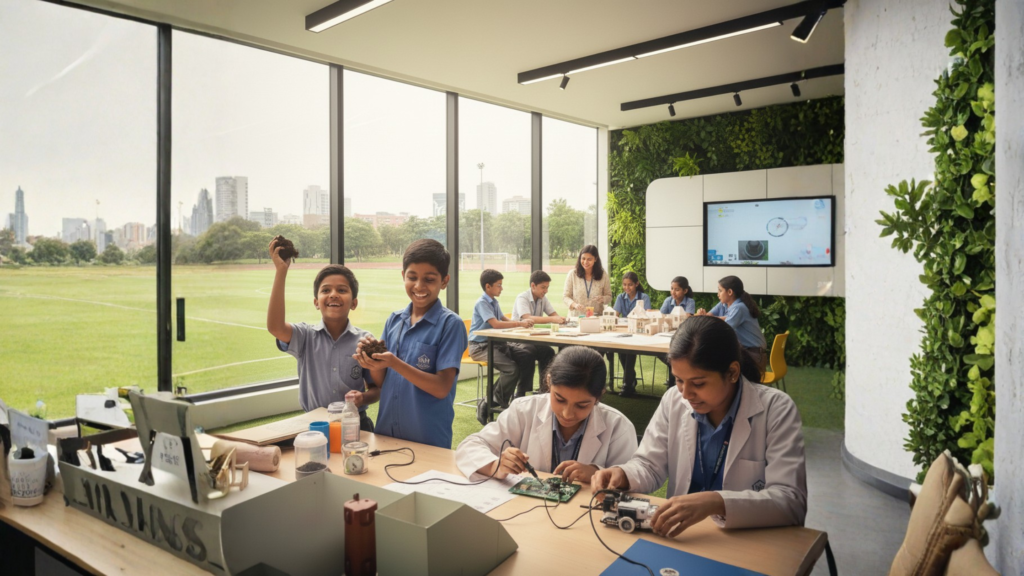
Active learning for kids encourages children to participate actively in the learning process instead of remaining passive listeners. At Skalvi International School, students are encouraged to think, understand concepts, frame questions, and explore answers together.
This approach follows the philosophy of “Knowing by Doing,” where children learn through participation, discussion, and exploration. Instead of focusing only on listening and remembering information, students engage with ideas and apply what they learn.
Moving Beyond Passive Learning
In many traditional classroom settings, learning often follows a lecture-based structure where teachers speak and students listen. This structure can limit interaction and reduce opportunities for inquiry.
Student-driven classrooms create a more interactive learning environment. Students are encouraged to ask questions, share ideas, and participate in discussions. This collaborative environment supports curiosity and builds confidence in expressing thoughts.
The Role of “Knowing by Doing”
“Knowing by Doing” encourages children to learn through participation and practical engagement. When students take part in activities, discussions, and presentations, they gain a clearer understanding of the concepts being explored.
Through classroom discussions, creative activities, and project-based learning, students apply knowledge in meaningful ways. This approach encourages curiosity and creates a positive attitude toward learning.
Encouraging Student Participation and Independence
Student participation is an important part of learning. Children are encouraged to take responsibility for their learning by asking questions, exploring ideas, and discussing concepts with peers.
As students progress through the middle and secondary stages, they continue to develop critical thinking skills and learn to evaluate ideas and explore solutions. This process supports the development of scientific temper and evidence-based thinking.
Learning Through Integrated Term Projects
Integrated term projects provide opportunities for students to demonstrate their learning outcomes. Students present their understanding through activities such as role plays, discussions, presentations, and collaborative projects.
These experiences help students communicate ideas clearly while applying their knowledge in practical ways.
The “Teach to Learn” Approach
At Skalvi International School, peer learning plays an important role in classroom interaction. The “Teach to Learn” approach encourages students to explain concepts to their peers.
When students teach what they learn, they remember about 90 percent of the concepts. This approach strengthens understanding while also improving communication and confidence.
Life Beyond Academics
Learning at \extends beyond academic subjects. The philosophy of Life Beyond Academics ensures that non-scholastic areas receive equal importance.
Students participate in Happy Hobby Hours, where they explore activities such as sports, music, visual arts, theatre, and other creative pursuits. These activities help students develop creativity, teamwork, and self-expression alongside academic learning.
Frequently Asked Questions
Why is active learning important for children?
Active learning encourages children to participate in discussions, explore ideas, and apply concepts. This involvement helps students understand subjects more clearly and supports long-term learning.
How does the “Teach to Learn” method help students?
The “Teach to Learn” approach encourages students to explain concepts to their peers. When students teach what they learn, they remember about 90 percent of the concepts and develop stronger communication skills.
Which activities support active learning in school?
Activities such as discussions, integrated term projects, role plays, presentations, and creative activities support active learning. These activities encourage participation and help students apply their knowledge in practical situations.