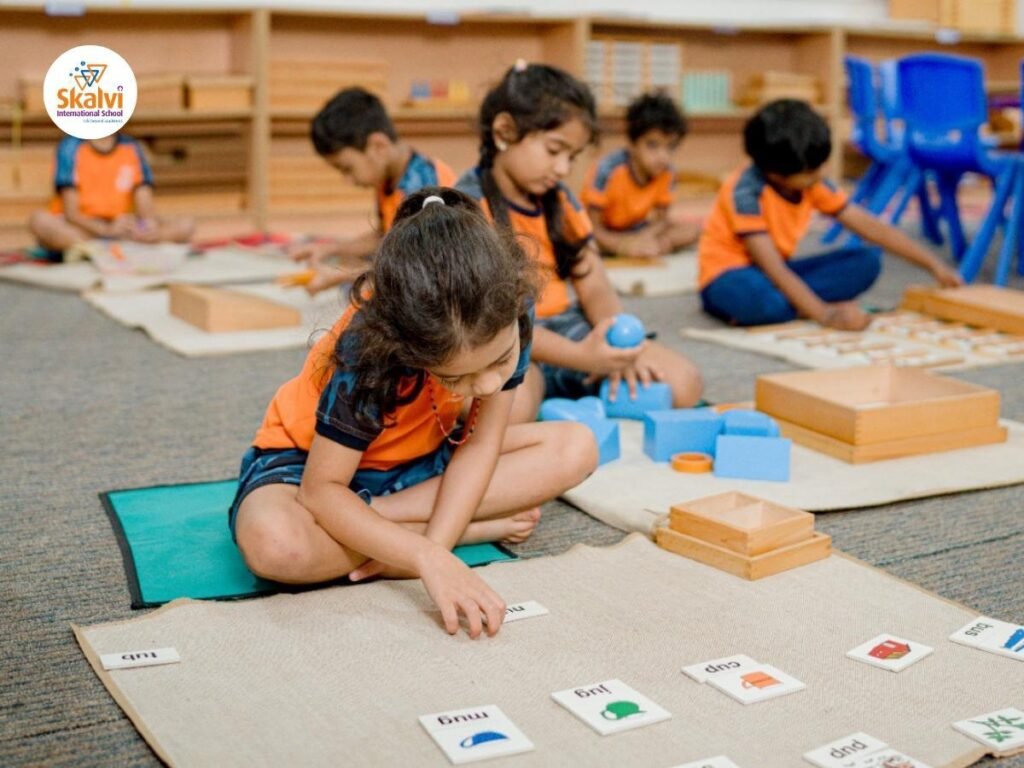
Many parents assume their child will have to sit an exam to get into a good school. In fact, the answer depends on the class. For most young children, a CBSE admission test is not allowed at all, while older students may be asked about previous results. This guide from the Skalvi International School CBSE school in JP Nagar explains what the law says, how it changes by grade and how to prepare your child either way.
What You Will Learn
- Whether CBSE schools can hold entrance tests
- How the rules change from nursery to Class 11
- The difference between a test and an interaction
- How to prepare your child without pressure
CBSE Admission Test: What the Law Says
CBSE itself does not run a common entrance test for its schools. Each school sets its own admission process within the law. For elementary classes, the Right to Education Act is clear. As the Right to Education FAQ explains, admission works with no tests, and no admission can be denied for lack of any documentation, including proof of age. The table shows how this plays out by grade.
| Grade band | Entrance test allowed? | What schools usually do |
|---|---|---|
| Montessori and pre-primary | Tests are not appropriate for this age | Informal play or a short meeting |
| Class 1 to Class 8 | No screening under the RTE Act | Interaction, documents and seat availability |
| Class 9 and Class 10 | Outside RTE elementary rules | Previous results, records and sometimes an assessment |
| Class 11 | Outside RTE elementary rules | Class 10 results and subject or stream choice |
Rules can be applied differently in practice, so ask each school to explain its process in writing. Our academics page explains each stage of learning.
School Entrance Test vs Interaction: Know the Difference
The RTE Act defines a screening procedure as any method of selecting one child in preference over another, other than a random method. That means the name of the step matters less than how it is used. A written test that ranks children is screening. A friendly conversation that helps the teacher get to know the child, and does not decide the seat, is not.
- Interaction: a short conversation or play activity, used to understand the child and plan support.
- Readiness check: sometimes used in higher classes to see which topics a new student may need help with.
- Entrance test: a scored exam used to pick between applicants, which is not allowed for elementary admission.
Here is an example. A school asks a six-year-old to read a short picture book with a teacher. If the teacher uses it to learn how the child reads and to plan support, that is an interaction. If the school ranks children by reading speed and offers seats to the fastest, that is screening.
How to Prepare Your Child Either Way
For young children, the best preparation is no formal preparation. Keep the visit relaxed, explain in simple words what will happen and make sure your child is rested. Drilling worksheets or practising answers usually adds stress without helping. Children learn new routines best when the first experience of a school feels safe and friendly, so a calm visit is a better investment than any practice session at home.
For older students joining Class 9 or Class 11, preparation is more practical. Keep recent report cards ready, revise the main topics from the current year and ask the school whether it will review any subject areas. If a stream or subject choice is involved, think about it in advance with your child.
Values matter in how a school treats new children too. A school that respects every child, whatever their pace, is more likely to support yours well. Our ethics, values and culture page explains what we expect from our school community. Our 10 reasons to choose Skalvi describe how children learn once they join.
Whatever the grade, ask the school one direct question: does any part of the process decide who gets a seat? A clear answer helps you know exactly what to expect.
It also helps to know how seats are usually allotted when there is no test. For elementary classes, schools typically consider seat availability, the child’s age against the class criteria and the order or method set out in their published admission process. Some schools also follow state rules on priority for siblings or neighbourhood, where these apply. Ask each school how it decides when there are more applicants than seats, and whether the method is written down. A transparent answer is a good sign.
For families comparing several schools, keep a short note of each school’s process side by side: whether there is an interaction, what it involves, which documents are needed and when results are shared. Seeing the steps together makes it easier to plan visits and avoid clashing dates.
What Most People Overlook
We have found that parents spend weeks preparing young children for a test that the law does not allow. That time is better spent visiting schools and asking questions. Customers most often ask us whether an interaction is really a test in disguise. Ask the school directly whether the interaction affects the seat. Remember that senior-class admissions follow different rules, so check them separately with each school well before the year begins, especially if a stream choice is involved.
How We Help You Understand Our Admission Steps
Submit an admission enquiry or message our team on WhatsApp to ask about the admission step for your child’s grade. Our team will explain what the visit or interaction involves and what documents to bring, so your family knows what to expect.
Verdict
For nursery and Class 1 to Class 8, a CBSE admission test that ranks children is not allowed under the RTE Act, though schools may hold friendly interactions. For Class 9 and above, results and records play a bigger part. Visit the Skalvi International School website to ask about the admission step for your child.
FAQ
Is there a CBSE admission test for school entry?
CBSE does not run a common entrance test. For elementary classes, the RTE Act does not allow screening, while senior classes may review previous results.
Can schools hold entrance tests for Class 1?
No. Under the RTE Act, schools must not use a screening procedure for elementary admission, which includes Class 1 and the classes up to Class 8.
What is a screening procedure under the RTE Act?
Section 2(o) defines it as any method of selecting a child for admission in preference over another, other than a random method.
Are there tests for nursery or Montessori admission?
Formal tests are not appropriate at this age. Schools usually meet the family and spend a little time with the child in a relaxed setting.
Is a school interaction the same as a test?
Not if it is used only to get to know the child. It becomes screening if performance in it decides who gets a seat.
Do schools test students joining Class 9?
Some schools review previous results or hold a short assessment for Class 9, since it falls outside the RTE elementary rules. Ask each school.
How is Class 11 admission decided?
It usually depends on Class 10 results, the subject or stream chosen and the combinations available at the school, along with seat availability.
Should I prepare my young child for an admission test?
Formal preparation is not needed for young children. Keep the visit relaxed and explain in simple words what will happen.
What is the penalty for screening children at admission?
The RTE Act provides for fines on schools that subject a child to screening, with higher fines for repeated contraventions.
Can a school ask parents questions during admission?
Schools can share information and learn about the family, but the RTE Act also prohibits screening parents to select one child over another.
What should I do if a school insists on a test for Class 1?
Ask the school to explain in writing how the test is used. If it decides admission, it may conflict with the RTE Act’s rules.
Do CBSE schools need documents before admission?
Schools usually ask for documents, but for elementary classes the RTE Act says no child should be denied admission for lack of age proof.
Are readiness checks allowed for older students?
For Class 9 and above, some schools use a short readiness check to see which topics a new student may need help with.
Can I see the Skalvi campus before the admission step?
Yes. Our enquiry form lets you choose a preferred campus tour date, so your child can see the school in a relaxed way first.
How do I ask about the admission step at Skalvi?
Submit an admission enquiry online or message our team on WhatsApp, and we will explain the step for your child’s grade.