How Can Families Find the Right School for Their Child in Bangalore?
Choosing the right school is a personal decision because every child has different learning needs, interests and strengths. For families planning admission for the 2027–28 academic year, finding the right school for a child in Bangalore should involve more than comparing school names or general popularity. Parents can build a clearer decision-making process by considering the child first and then evaluating schools against those requirements.
For families seeking quality education in Bengaluru, institutions such as Skalvi International School can serve as a useful benchmark during this evaluation. The objective is not simply to find a highly regarded school, but to identify an environment where the child can learn, participate, develop confidence and progress comfortably.
What Does the Right School Mean for a Child?
There is no single school that will be the right fit for every child. Parents should consider factors such as:
→ Learning preferences
→ Academic needs
→ Interests and strengths
→ Social development
→ Communication style
→ Extracurricular interests
→ Daily routine
Understanding the child first can help families evaluate schools more meaningfully.
How Should Parents Understand Their Child’s Learning Needs?
Before shortlisting schools, parents can reflect on how their child learns best.
Consider:
→ Does the child learn through discussion?
→ Does the child enjoy practical activities?
→ Does the child prefer structured learning?
→ Does the child enjoy creative projects?
→ Does the child need additional academic guidance?
These observations can help parents identify the type of learning environment that may suit the child.
Why Should Parents Consider the Academic Approach?
Academic quality remains an important part of school selection. Parents should understand how teachers help students develop conceptual understanding and confidence.
They can ask:
→ How are concepts taught?
→ How is progress monitored?
→ What academic support is available?
→ Are students encouraged to ask questions?
→ Are children given opportunities to apply their knowledge?
Families can explore Skalvi International School’s Academic Programmes to understand its approach to academic learning.
Should Parents Look Beyond Academics?
Yes. A child’s school experience includes physical, creative and social development as well.
Parents can ask about:
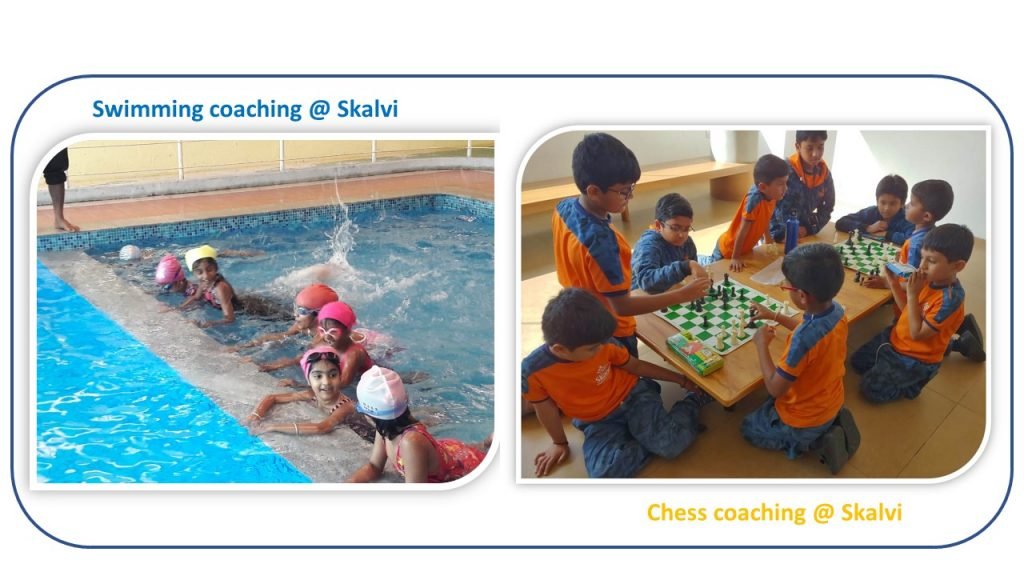
→ Sports
→ Creative activities
→ Projects
→ Teamwork
→ Presentations
→ Leadership opportunities
These experiences can help children develop confidence, communication and collaboration.
How Important Is School Culture?
A child spends many hours at school, so the environment can influence their everyday experience.
Parents can observe whether the school encourages:
→ Respect
→ Responsibility
→ Empathy
→ Cooperation
→ Confidence
→ Integrity
Teacher-student interaction during a campus visit can provide useful insight into the school culture.
Families can also review Skalvi’s broader educational approach when evaluating student development.
What Should Parents Know About Safety?
Parents should feel confident that their child will be in a safe and supportive environment.
Useful questions include:
→ How is campus access managed?
→ How are students supervised?
→ What emergency procedures are followed?
→ How is visitor movement managed?
→ What transportation safety measures are followed?
Safety should be considered alongside academics and development rather than as a separate afterthought.
Why Does the Daily Routine Matter?
A school may be academically suitable but still create practical challenges if the daily commute is difficult.
Parents should consider:
→ Travel time
→ Traffic conditions
→ Transportation
→ Pickup and drop arrangements
→ Impact on sleep
→ Time available for homework and activities
A manageable routine can make it easier for children to balance school with rest and other interests.
Should Parents Consider Technology?
Technology can support different learning styles when it is used purposefully.
Parents can ask whether digital resources support:
→ Visual learning
→ Interactive lessons
→ Research
→ Projects
→ Collaboration
Technology should complement teacher guidance and meaningful classroom interaction.
What Role Does Infrastructure Play?
Infrastructure should be evaluated according to how it contributes to the child’s learning experience.
Parents can review:
→ Classrooms
→ Library
→ Laboratories
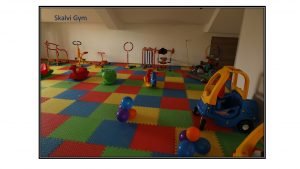
→ Activity spaces
→ Sports facilities
→ Technology resources
The focus should be on how students use these facilities rather than how impressive they appear.
Why Is Parent-School Communication Important?
Parents should understand how the school keeps families informed about their child’s academic progress and development.
Communication may include:
→ Academic updates
→ Student activities
→ Important announcements
→ Parent meetings
→ Student support
A clear communication process can help parents and teachers work together more effectively.
Should Parents Involve Their Child in the Decision?
Yes. Depending on the child’s age, parents can involve them in campus visits and conversations about school.
Children may notice aspects that parents overlook, such as:
→ Classroom atmosphere
→ Comfort with the environment
→ Activities they find interesting
→ Interaction with teachers
Their perspective can be useful, while parents can continue to consider the broader educational and practical factors.
How Can Parents Compare Their Shortlisted Schools?
Families can use a consistent checklist:
| Area | What to Consider |
|---|---|
| Academics | Teaching methods and academic support |
| Development | Sports, arts, projects and leadership |
| Safety | Campus and transportation safety |
| Culture | Values and teacher-student interaction |
| Technology | Meaningful use of digital resources |
| Infrastructure | Learning spaces and resources |
| Communication | Parent-school connection |
| Location | Daily commute and accessibility |
| This helps parents compare schools according to their own priorities. |
Why Should Parents Visit the School?
A campus visit can turn online research into a more practical evaluation.
Parents can observe:
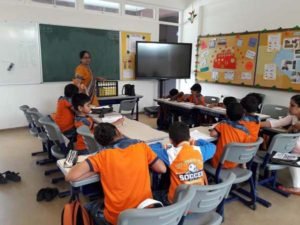
→ Classroom interaction
→ Student participation
→ Teacher communication
→ Learning spaces
→ Safety arrangements
→ Overall atmosphere
Current campus information can be verified through Skalvi International School’s Contact Page.
How Can Families Make the Final Decision?
After research and campus visits, parents can consider which school provides the strongest overall fit for their child.
The final decision should balance:
→ Educational requirements
→ Child’s interests
→ Academic environment
→ Development opportunities
→ Safety
→ School culture
→ Family routine
→ Long-term suitability
No single factor needs to determine the decision on its own.
Conclusion
Finding the right school for a child in Bangalore starts with understanding the child’s needs and then evaluating schools against those requirements. Academics, holistic development, safety, culture, technology, infrastructure, communication and daily routine can all contribute to the overall fit.
For families seeking quality education in Bengaluru, institutions such as Skalvi International School can serve as a useful benchmark during this evaluation. For 2027–28 admission, parents can combine research, campus visits and their child’s perspective to make a more thoughtful school-selection decision.
Frequently Asked Questions
1. How can parents find the right school for their child?
Parents should first understand their child’s needs and then evaluate schools based on academics, development, safety, culture and practical factors.
2. Should children be involved in choosing a school?
Yes. Their comfort and impressions during a campus visit can provide useful insight.
3. What academic factors should parents consider?
Teaching methods, concept-based learning, academic support and progress monitoring are useful factors.
4. Why is school culture important?
A positive school culture can support confidence, respect, responsibility and healthy student relationships.
5. Should parents consider extracurricular activities?
Yes. Sports, arts, projects and leadership opportunities can support broader development.
6. How important is school safety?
Safety is essential and should include campus access, supervision, emergency procedures and transportation.
7. Does technology matter when choosing a school?
It can, particularly when digital resources are used purposefully to support learning.
8. Why should parents consider infrastructure?
Learning spaces and resources can influence the opportunities available to students.
9. Should commute affect the school decision?
Yes. Travel time can affect sleep, homework, activities and the child’s overall daily routine.
10. How can parents compare shortlisted schools?
Using the same criteria for each school can make the decision more structured and objective.
11. Why should parents visit schools before admission?
A visit helps families observe the actual environment and ask questions directly.
12. What should parents observe during a campus visit?
They can observe classrooms, teacher-student interaction, student participation, facilities and general atmosphere.
13. Is the most popular school always the right school?
No. The right choice depends on the individual child and the family’s educational requirements.
14. Should parents consider long-term suitability?
Yes. Families can consider whether the school can support the child as academic and developmental needs change.
15. What is the most important factor in school selection?
The overall fit between the child’s needs and the school’s educational environment is the most important consideration.