Introduction
Young children naturally explore their surroundings. They observe objects, ask questions, and experiment with different ideas. These early experiences play an important role in shaping how children think and understand the world.
When learning includes play and exploration, children become more engaged and curious. They start connecting ideas, solving small challenges, and understanding concepts in meaningful ways.
At Skalvi International School, learning experiences are designed to encourage exploration and participation so that children develop thinking skills naturally through interaction and discovery.
What Is Play and Exploration in Learning?
Play and exploration refer to learning experiences where children actively engage with activities, materials, and ideas. Instead of only listening to explanations, children learn by observing, experimenting, and interacting with their environment.
This approach allows children to develop cognitive skills such as thinking, reasoning, and problem-solving.
At Skalvi International School, children are encouraged to explore ideas, participate in activities, and interact with peers as part of their learning journey.
How Play-Based Exploration Works
Children develop understanding when they are allowed to explore ideas freely within a structured environment.
Common learning experiences include:
- Exploring objects and materials
- Participating in creative activities
- Engaging in group interactions
- Observing patterns and solving simple challenges
These activities support curiosity and help children build thinking skills.
Why Play and Exploration Matter in Early Learning
Play and exploration are essential because they allow children to learn through experience.
Encourages Curiosity
Children naturally ask questions and explore new ideas when they are engaged in playful learning environments.
Develops Thinking Skills
Exploration allows children to observe, compare, and understand relationships between different concepts.
Improves Problem-Solving Abilities
When children experiment with ideas, they learn to identify solutions and think creatively.
Supports Active Learning
Playful activities encourage children to participate actively rather than simply receive information.
Learning environments like those at Skalvi International School support exploration so that children remain curious and engaged.
Key Benefits of Play-Based Learning
Play and exploration provide several important benefits for young learners.
- Strengthens observation and thinking skills
- Encourages curiosity and creativity
- Supports early problem-solving abilities
- Improves social interaction with peers
- Helps children understand concepts naturally
- Builds confidence in exploring ideas
These benefits help children develop strong cognitive foundations.
Play-Based Learning vs Structured Instruction
| Learning Feature | Play-Based Learning | Structured Instruction |
| Learning Style | Exploration and discovery | Teacher-led explanation |
| Student Participation | Highly interactive | Mostly listening |
| Cognitive Development | Encourages reasoning and problem solving | Focuses on information delivery |
| Curiosity | Encourages questioning and exploration | Limited opportunities for exploration |
| Engagement | High student engagement | Moderate engagement |
Practical Tips to Encourage Play and Exploration
Parents and educators can support cognitive development through simple activities.
- Encourage children to explore objects and ask questions
- Provide opportunities for creative play and storytelling
- Support activities that involve building, drawing, or experimenting
- Allow children to explain what they discover
- Encourage interaction and teamwork with peers
These practices help children develop thinking and reasoning skills.
Where Play and Exploration Are Used
Activity-Based Learning
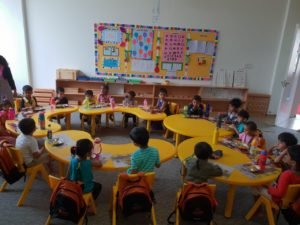
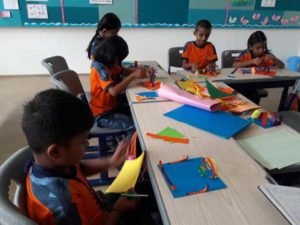
Children participate in hands-on activities that help them explore ideas.
Creative Expression
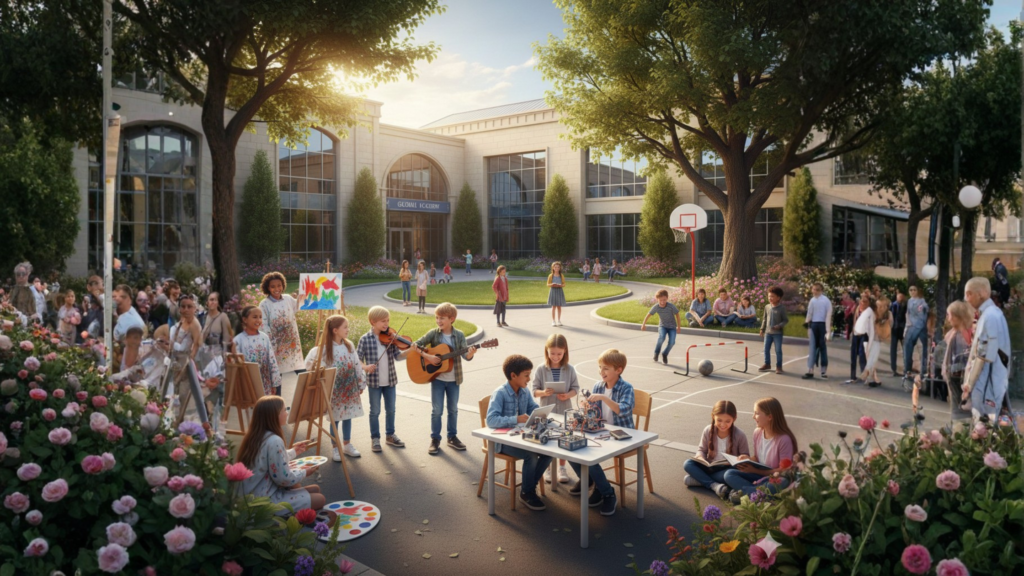
Art, music, and storytelling allow children to express imagination and thoughts.
Group Interaction
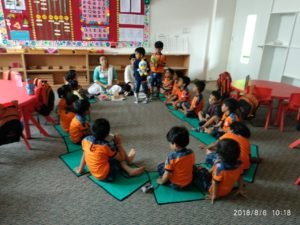
Working with peers encourages communication and collaboration.
Learning Through Discovery
Children explore ideas and concepts through observation and participation.
At Skalvi International School, such experiences help children develop curiosity, confidence, and strong thinking skills.
Frequently Asked Questions
Why is play important for cognitive development?
Play helps children explore ideas, solve problems, and develop thinking skills through active participation and discovery.
How does exploration help children learn?
Exploration allows children to observe patterns, ask questions, and understand how things work, which strengthens cognitive development.
How do schools support play-based learning?
Schools support play-based learning through activity-based lessons, creative expression, group interaction, and exploration-based learning experiences.