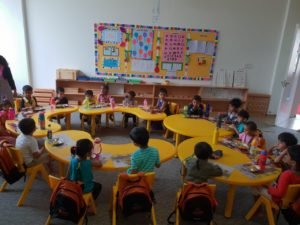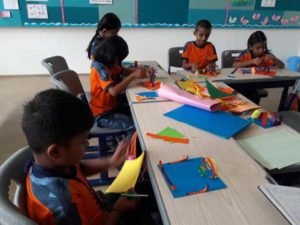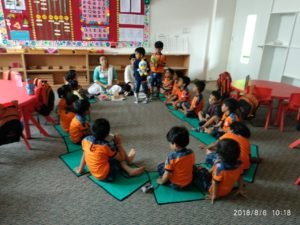
Parents today want children to learn beyond textbooks. They search for practical education, real-life learning experience, best school in Bangalore, and CBSE schools near me because they want kids to develop skills that prepare them for real-world challenges. Skalvi International School emphasizes practical learning, blending CBSE curriculum with hands-on projects, real-life exercises, and skill-building opportunities. This ensures children understand concepts and can apply them confidently.
What Is Practical Learning?
Practical learning is an education method where children actively engage in applying concepts, solving real-life problems, and participating in activities instead of only memorizing lessons. Through practical education, students develop problem-solving skills, communication, teamwork, confidence, and career-readiness. At Skalvi International School, practical learning is integrated into academics, activities, and projects.
Advantages of Practical Learning
| Advantage | How It Helps Students |
| Confidence | Students feel capable applying knowledge |
| Real-Life Skills | Teaches decision-making, problem-solving, and adaptability |
| Career Preparation | Early exposure to teamwork and leadership |
| Engagement | Makes learning interactive and enjoyable |
| Critical Thinking | Encourages analysis and independent thinking |
Challenges of Practical Learning
| Challenge | Explanation |
| Time-Intensive | Projects and practical activities require more time |
| Teacher Expertise | Teachers must gSkalvi International School addresses these challenges with trained teachers, structured guidance, and a balanced curriculum.
uide activities effectively |
| Assessment | Evaluating skills is less straightforward than exams |
| Student Adaptation | Some children m ay take time to adjust |
How Skalvi International School Implements Practical Learning
1. Hands-On Projects
Students engage in experiments, collaborative projects, and problem-solving exercises that connect theory to real-world applications.
2. Real-Life Learning Experiences
Children participate in activities simulating real-life scenarios, helping them understand concepts and apply knowledge practically.
3. Skill Development
Skill-based learning is reinforced through practical exercises, group tasks, presentations, and leadership activities.
4. Confidence and Communication
Practical learning encourages students to express ideas, present solutions, and communicate clearly, boosting confidence.
5. Career-Ready Skills
Practical learning nurtures teamwork, time management, decision-making, and problem-solving — foundational skills for future career readiness.
Parent Checklist: What to Look for
| Feature | Why It Matters |
| Hands-On Projects | Connect lessons to practical scenarios |
| Teacher Expertise | Ensures guidance and skill development |
| Real-Life Learning | Improves problem-solving and independence |
| Communication & Confidence | Builds speaking, presentation, and teamwork skills |
| Career-Readiness | Prepares students for higher education and future careers |
How Practical Learning Supports Holistic Development
Practical learning complements academics. Students become more engaged, curious, and confident while reinforcing classroom knowledge. Skalvi International School integrates practical learning with CBSE curriculum, activities, value-based education, and career skill-building.
Conclusion
Practical learning is essential for children’s growth. It builds confidence, communication, problem-solving, and real-life skills. For parents searching for best school in Bangalore, CBSE schools near me, or schools with practical learning, Skalvi International School offers a balanced approach combining academics, skill-building, real-life learning experiences, and career development.
FAQ
What is practical learning in school?
Applying classroom knowledge through hands-on activities, projects, and real-life exercises.
Why is practical education important for children?
It improves problem-solving, creativity, confidence, communication, and prepares students for future challenges.
How does practical learning build career skills?
Students develop teamwork, decision-making, leadership, and critical thinking.
Are there challenges in practical learning?
Yes, it can be time-intensive, requires skilled teachers, and assessment can be complex.
Does Skalvi International School focus on practical learning?
Yes, it integrates practical learning, skill-based activities, real-life experiences, and career readiness within CBSE curriculum.