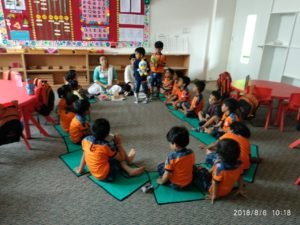
A good teacher-student ratio allows teachers to notice learning gaps, encourage participation and provide timely feedback without making the classroom difficult to manage. There is no single perfect number for every grade. Younger children usually need closer supervision, while older students may work effectively in slightly larger groups.
Parents comparing schools with good teacher-student ratio should not judge a school by one number alone. Teacher quality, actual class size, support staff and the way a school provides individual attention in school are equally important. Families considering Skalvi International School should evaluate both its published ratio and the actual classroom experience.
What Does Teacher-Student Ratio Mean?
Teacher-student ratio compares the total number of students with the number of teachers. A ratio of 1:20 means approximately one teacher is available for every twenty students in the measured group.
This figure may not equal the number of students in one classroom because some schools include subject teachers and specialist educators. Parents should therefore ask for both the school-wide ratio and the usual classroom strength for their child’s grade.
Why Does a Good Teacher-Student Ratio Matter?
A manageable ratio can make it easier for teachers to answer questions, review work and identify students who need extra support.
| Learning Area | How a Manageable Ratio Helps |
|---|---|
| Participation | More students can contribute |
| Feedback | Work can be reviewed regularly |
| Learning support | Gaps may be identified earlier |
| Classroom management | Lessons remain organised |
| A smaller ratio does not automatically guarantee better learning. A skilled teacher with clear routines may manage a moderately sized class effectively, while a smaller class may still provide weak learning when lessons lack structure. |
What Ratio Is Suitable for Different Age Groups?
The suitable ratio depends on the child’s age and learning stage. Preschool and early-primary students generally need closer interaction and supervision. Older students may be more independent but still require accessible teachers and regular feedback.
Parents should also ask whether assistant teachers, subject specialists, counsellors or special educators are available. These support systems can influence the quality of individual attention.
What Does Individual Attention in School Mean?
Individual attention in school does not mean one teacher works with only one child throughout the day. It means the school has systems to recognise every student’s progress, participation and learning difficulties.
It may include regular observation, assignment feedback, extra explanation, opportunities to ask questions and communication with parents when support is required.
During a visit to Skalvi International School or any shortlisted campus, parents should ask how teachers track progress and what happens when a student falls behind.
How Can Parents Verify the Real Classroom Ratio?
Parents should not depend only on promotional claims. They should ask specific questions during the admission process.
| Question | What It Reveals |
|---|---|
| How many students are usually in one class? | Actual classroom strength |
| Is an assistant teacher available? | Support for younger grades |
| How are learning gaps identified? | Academic monitoring |
| How often is feedback shared? | Consistency of support |
| Parents should also observe whether students interact comfortably with teachers and whether the classroom arrangement encourages participation. |
What Does Skalvi International School State?
Skalvi International School highlights a teacher-student ratio of 1:24 on its official website. Its mandatory public disclosure separately reports 52 teachers and a teachers-to-sections ratio of 2:1. Parents should confirm the current classroom strength and grade-specific arrangements during admission.
The school also presents student-driven education, practical learning and integrated projects as parts of its educational approach. Parents can assess how these ideas translate into classroom interaction, participation and feedback during a campus visit.
Should Teacher-Student Ratio Be the Main Admission Factor?
Teacher-student ratio should be important, but it should not be the only selection factor. Parents should also evaluate teaching quality, safety, curriculum, parent communication, facilities, travel time and the child’s comfort.
The best school is not necessarily the one advertising the smallest class. It is the school where teachers understand students, monitor progress and create a supportive learning environment.
Conclusion
A good teacher-student ratio can support classroom participation, regular feedback and early identification of learning needs. However, the number becomes meaningful only when qualified teachers, organised classrooms and effective monitoring systems support it.
Families comparing schools with good teacher-student ratio should ask about actual class strength, support staff and progress tracking. Skalvi International School can be included in the comparison, with parents confirming current grade-specific details directly.
Frequently Asked Questions
1. What is a good teacher-student ratio in school?
It is a manageable ratio that allows teachers to know students, answer questions and provide regular feedback.
2. Is a 1:20 teacher-student ratio good?
It can be good when qualified teachers and effective classroom systems support individual learning.
3. Is 1:30 too many students for one teacher?
It depends on the grade, subject, teacher experience and additional classroom support.
4. Why is a lower teacher-student ratio important?
It may help teachers identify learning gaps, involve quieter students and provide timely feedback.
5. Does a smaller class guarantee better results?
No. Teaching quality, curriculum, student effort and school support also influence learning outcomes.
6. How can parents check the actual class size?
Ask for the typical number of students in the child’s grade rather than only the school-wide ratio.
7. What does individual attention in school mean?
It means monitoring progress, giving useful feedback and supporting students when learning difficulties appear.
8. Do younger children need smaller classes?
Younger children generally benefit from closer supervision, interaction and additional classroom assistance.
9. What teacher-student ratio does Skalvi International School state?
Its official website highlights a 1:24 ratio. Parents should verify the current grade-specific class strength directly.
10. How should parents compare schools with good teacher-student ratio?
Compare actual class size, teacher quality, support staff, feedback systems, safety and student comfort.