The Broken Promise of MOOCs: Why We Drop Out
To understand the solution, we must first diagnose the problem. The traditional MOOC format relies heavily on pre-recorded video lectures and automated quizzes. While this scales well for the provider, it often isolates the learner. Without accountability, the initial burst of motivation fades rapidly when faced with complex concepts or life’s distractions.
Students are not dropping out because the content is poor; they are dropping out because they are lonely in their learning journey. There is no one to ask, “Why does this work this way?” and no one to say, “Great job on that assignment.” This isolation creates a vacuum where procrastination thrives.
Enter the Skalvi Learning Model: A Human-Centric Approach
The Skalvi learning model was designed to dismantle the isolation of remote learning. Unlike static libraries of video content, Skalvi integrates active mentorship into the fabric of the curriculum. It recognizes that information is free, but transformation requires guidance.
By pairing learners with experienced mentors, the model reintroduces the “master-apprentice” dynamic that has driven human skill acquisition for centuries. Mentors do more than grade papers; they provide:
- Accountability: Regular check-ins ensure students stay on track.
- Clarification: Immediate resolution of doubts prevents knowledge gaps from compounding.
- Motivation: Emotional support during challenging modules keeps completion rates high.
Skalvi vs. Online Schooling: Understanding the Difference
It is crucial to distinguish between modern mentorship platforms and the emergency remote teaching we witnessed during the pandemic. When comparing Skalvi vs online schooling, the differences are stark. Traditional online schooling often replicates the industrial classroom model digitally—30 students staring at one teacher on a Zoom call, listening passively.
Skalvi serves as a robust alternative to online schooling by shifting the focus from “teaching” to “learning.” In a mentor-led environment, the educational path adapts to the student, rather than forcing the student to adapt to a rigid syllabus. This flexibility is what makes it a premier personalized learning platform India needs right now, catering to diverse learning speeds and styles.
Beyond Academics: A Holistic Education Approach
One of the significant criticisms of MOOCs and traditional rote memorization is the lack of real-world applicability. Completing a course is useless if the student cannot apply the skills in a practical environment. This is why Skalvi champions a holistic education approach.
This approach acknowledges that a student is more than just a test score. It involves nurturing critical thinking, problem-solving abilities, and emotional intelligence alongside technical curriculum. By focusing on skills-based education India can bridge the employability gap that currently exists. Skalvi’s mentors guide students not just to memorize answers, but to understand the underlying logic, fostering a depth of knowledge that automated quizzes simply cannot measure.
Driving Results with Student Engagement Programs
Engagement is the currency of online learning. Without it, even the best curriculum fails. Skalvi utilizes sophisticated student engagement programs to keep learners hooked. This goes beyond gamification; it involves interactive learning for students where they actively participate in the creation of their knowledge.
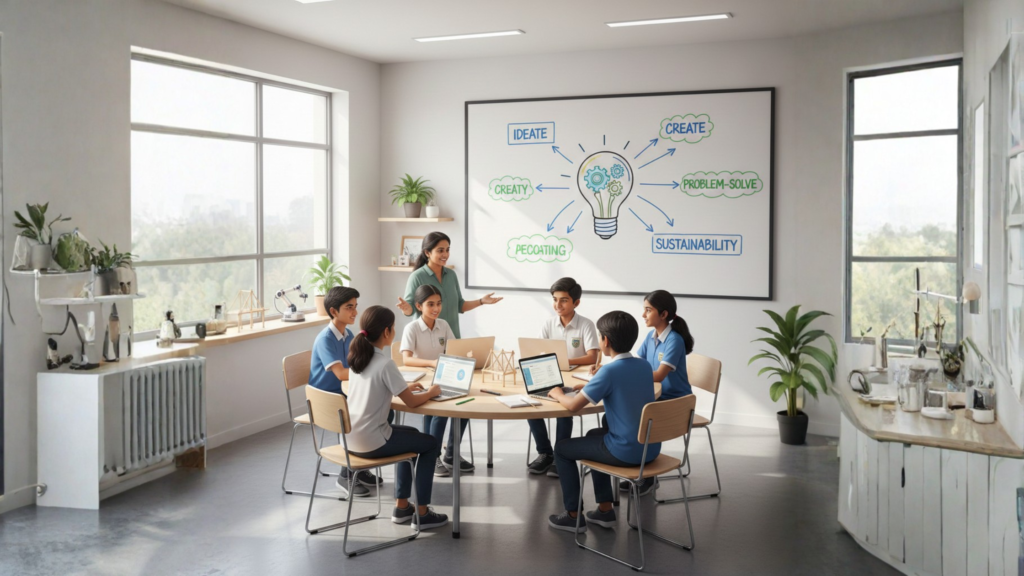
Through live coding sessions, real-time feedback loops, and peer-to-peer collaboration facilitated by mentors, the learning process becomes active. Students aren’t just watching; they are doing. This interactivity is the primary driver behind the significantly higher completion and success rates observed in mentor-led courses compared to their passive MOOC counterparts.
Conclusion: The Future is Mentor-Led
The era of passive video consumption is ending. As we move forward, the value of an educational platform will be measured not by the number of hours of video it hosts, but by the success of its students. The Skalvi learning model proves that when you combine high-quality curriculum with the empathy, accountability, and expertise of a human mentor, the results are transformative.
For parents and students looking for an alternative to online schooling that actually delivers on its promises, the answer lies in mentorship. It is time to move beyond completion rates and start focusing on competency rates.