Traditional online schooling often replicates the lecture hall format on a screen, resulting in passive consumption rather than active participation. To combat this, we need modern learning solutions in India that prioritize interaction as much as information. By integrating hobby-based communities with academic rigor, we can create a holistic education approach that nurtures not just the mind, but the social confidence of the student.
The Paradox of Connectivity: Understanding Virtual School Isolation
We live in a world that is more connected than ever, yet our students are reporting higher levels of loneliness. Standard online schooling platforms often treat education as a transaction: data is transferred from teacher to student via a video feed. This leaves little room for peer-to-peer bonding, spontaneous collaboration, or the soft-skills development that occurs during recess or group projects in a physical setting.
The isolation stems from a lack of shared experiences. Sitting alone in a room watching a webinar is fundamentally different from working together on a project. This gap is what SKALVI addresses by restructuring how students interact with content and with each other. By focusing on shared interests and hobbies, the platform creates natural, organic opportunities for socialization that forced breakout rooms simply cannot match.
What is the Skalvi Learning Model?
The Skalvi learning model is not just another Learning Management System (LMS); it is a paradigm shift designed to function as a personalized learning platform India can rely on for comprehensive development. Unlike mass-market ed-tech products that prioritize scaling user numbers, Skalvi focuses on the quality of engagement.
At its core, this model leverages the concept of ‘Hybrid Hobby Models.’ It recognizes that children bond best when they are doing something they love. Whether it is coding, creative writing, or scientific experimentation, the learning is anchored in activity. This transforms the platform into an activity-based learning platform where the primary driver of attendance is interest, not obligation. By centering education around passion, social barriers melt away, allowing students to connect authentically.
Skalvi vs Online Schooling: A Comparative Look
When evaluating Skalvi vs online schooling, the differences are stark and significant. Traditional online schooling is often characterized by large batch sizes, muted microphones, and cameras turned off. It is an environment designed for delivery, not dialogue.
- Traditional Online Schooling: Focuses on syllabus completion. Interaction is limited to ‘raising a hand’ virtually. The teacher-to-student ratio is often too high to permit meaningful connection.
- The Skalvi Alternative: Focuses on student engagement programs. Interaction is continuous and essential to the lesson. It acts as a genuine alternative to online schooling isolation by ensuring that every student has a voice.
For parents seeking a child-centric education model, the distinction is clear. Skalvi offers interactive learning for students that mimics the camaraderie of a club or a team, rather than the solitude of a lecture hall.
The Power of Small Groups and Mentor-Led Programs
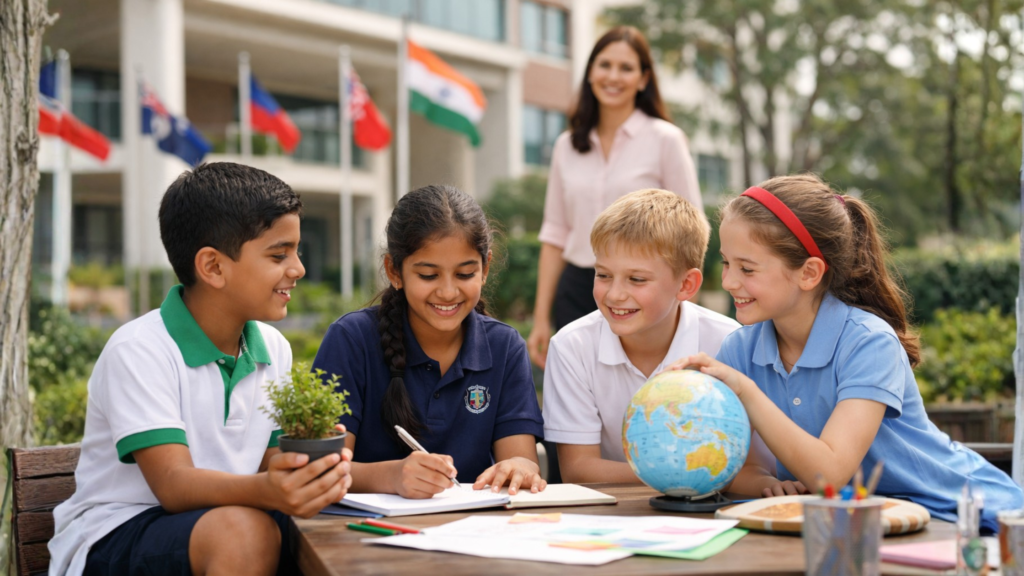
One of the antidotes to isolation is the small group learning model. Large virtual classrooms allow students to hide in the background. In contrast, Skalvi utilizes small, focused cohorts. This structure ensures individualized attention for students, making it impossible for a child to fall through the cracks.
Furthermore, these groups are guided by experts through mentor-led learning programs. A mentor plays a different role than a traditional teacher. While a teacher instructs, a mentor guides, inspires, and facilitates discussion. In the Skalvi ecosystem, mentors are responsible for fostering a safe space where students feel comfortable sharing ideas, making mistakes, and celebrating each other’s successes. This creates a micro-community of support, effectively countering the feelings of isolation found in standard innovative education platforms India has seen previously.
Activity-Based Learning: Building Real-World Confidence
Socialization is not just about chatting; it is about collaboration and confidence. Skills-based education India is rapidly gaining traction because parents realize that academic scores alone do not guarantee success. Students need confidence-building education that prepares them to speak up, lead, and work in teams.
Through Skalvi’s experiential learning schools approach, students engage in real-world learning for students. For example, rather than just reading about physics, a small group might build a virtual model together. This shared objective requires communication, negotiation, and teamwork—social skills that are vital for the future workplace. By moving beyond online classes and into active workshops, students build the social muscles that virtual isolation often causes to atrophy.
Conclusion: A Future-Ready Education for India
The solution to the socialization gap in virtual education is not to return entirely to the past, but to innovate for the future. We need future-ready education India can be proud of—systems that blend the flexibility of digital learning with the essential human need for connection.
The Skalvi learning model offers a blueprint for this future. By prioritizing small groups, mentorship, and interest-based engagement, it transforms the screen from a barrier into a bridge. For parents worried about the social costs of digital education, Skalvi offers a compelling path forward: a place where learning happens together, not alone.