Students reduce exam anxiety through hobbies by shifting their focus from high-stakes testing to creative problem-solving. Structured non-scholastic activities lower cortisol levels, build emotional regulation, and create a cognitive break. This active mental reset improves knowledge retention and prevents academic burnout.
Rote memorization creates stress. Experiential learning counteracts this immediately. When a student engages in visual arts, theatre, or sports, they process information differently. This shift builds emotional resilience in students. It replaces the fear of failure with the joy of learning by doing.
The impact of hobbies on test performance is direct. A rested, creatively stimulated mind processes academic challenges with clarity. Physical and creative movement breaks the cycle of anxiety. Students transform from passive receivers into active learners.
Building Stress-Free Learning Environments
The Role of Active Engagement
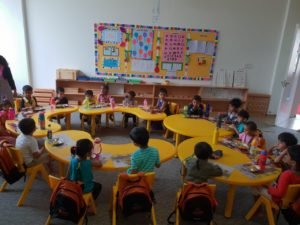
Passive listening limits cognitive growth. Moving away from conventional methods requires structural change. Skalvi implements U-shaped classrooms to provide equal opportunity for interaction. This design removes the traditional hierarchy. It fosters a collaborative space where student-led inquiry leads.
Happy Hobby Hours as a Standard
Non-scholastic areas demand equal importance. Integrating one hour daily for sports, music, and arts is non-negotiable. This translates directly to stress-free learning environments. Students who participate in daily physical or creative activities develop superior focus. This defines the standard for progressive foundational years. Anything else reduces quality.
How to Reduce Exam Anxiety Through Hobbies
Cognitive Diversion and Focus
Hobbies redirect mental energy. Engaging in complex motor tasks like playing an instrument or participating in martial arts forces the brain to remain present. This eliminates anticipatory anxiety regarding academic assessments.
Peer-to-Peer Confidence Building
Confidence stems from capability. The ‘Teach to Learn’ philosophy ensures students retain about 90 percent of what they teach their peers. Presenting concepts through small skits, impromptu debates, or role plays removes performance anxiety. It normalizes public speaking and peer review.
The Impact of Hobbies on Test Performance
Creative extracurricular activities directly influence cognitive function. This creates a pedagogical advantage over conventional schooling.
- Problem Formulation: Art and theatre require students to interpret and respond to prompts instantly.
- Alternative Solutions: Sports demand real-time strategic thinking and adaptability.
- Evidence-Based Action: These disciplines cultivate a scientific temper. Students learn to evaluate different solutions and implement the most optimal one.
This framework ensures secondary students face assessments with analytical thinking rather than rote recall. Knowing by doing utilizes the natural habit patterns of a child.
Fostering Emotional Resilience in Students
Resilience is a cultivated skill. It develops when students are encouraged to think, understand, and frame questions independently. Taking responsibility for learning through self-motivation eliminates the fear of exams. Integrated term projects and the Parent-in Programme allow students to showcase practical skills. They demonstrate capability beyond written tests.
Education requires a balance of stimulation and age-appropriate learning. Prioritizing child-led inquiry builds capable, resilient learners. Life beyond academics provides the necessary foundation for holistic development. Learn to lead, learn to express, and learn to learn.
Frequently Asked Questions
How do hobbies reduce academic stress?
Hobbies reduce academic stress by providing a cognitive break from passive learning. Engaging in arts or sports lowers cortisol, improves emotional regulation, and returns the student to academic tasks with renewed focus and clarity.
Why are non-scholastic activities important for students?
Non-scholastic activities build emotional intelligence and practical problem-solving skills. They allow students to develop self-motivation, peer collaboration, and resilience, which directly supports their overall cognitive and academic development.
Does peer teaching improve confidence?
Yes. Teaching peers improves confidence by reinforcing subject mastery. The Teach to Learn method proves that students retain approximately 90 percent of taught material, transforming them from passive receivers to active leaders.