While clothing does not define a person’s character, it significantly influences how they perceive themselves and how they engage with the world. This concept is increasingly relevant in structured educational programs where apparel plays a pivotal role. By implementing thoughtful dress codes or uniform programs, educators and parents can help unlock a child’s potential, fostering a sense of responsibility and readiness that serves as the bedrock for future leadership.
Understanding ‘Enclothed Cognition’: The Science of Self-Confidence
The idea that clothing affects our psychological state is backed by a phenomenon known as “enclothed cognition.” Research suggests that the symbolic meaning of the clothes we wear, combined with the physical experience of wearing them, impacts our cognitive processes. When a child puts on a crisp, well-fitting uniform or designated school attire, they aren’t just getting dressed; they are stepping into a role.
From Outfit to Mindset
Just as a firefighter feels a sense of duty when donning their gear, a student wearing structured apparel enters a mindset of learning and focus. This psychological shift is crucial for developing leadership skills in children. It signals to the brain that it is time to perform, listen, and lead. This separation between “play clothes” and “work clothes” helps children compartmentalize their day, allowing them to switch into a more focused mode of thinking when it counts.
Building Self-Confidence in Kids
Inconsistency in attire can sometimes lead to anxiety regarding social status or appearance. A unified apparel program eliminates the morning stress of “what to wear” and the social pressure of keeping up with trends. By removing these superficial barriers, we create a clear path for self-confidence in kids to bloom. When children feel smart and look the part, they are more likely to raise their hands, volunteer for tasks, and step into leadership roles without the fear of judgment based on their attire.
Non-Verbal Communication for Students: The Silent Language of Leadership
Communication is 93% non-verbal. For aspiring young leaders, understanding how to present themselves is a vital skill. Non-verbal communication for students involves posture, eye contact, and the general way they carry themselves. Structured apparel acts as a scaffold for this physical presence.
Loose, ill-fitting, or overly casual clothing can sometimes encourage a slouching posture or a lackadaisical attitude. Conversely, structured apparel encourages better posture and a sense of alertness. When a student stands tall, they naturally project authority and competence. This physical alignment feeds back into their mental state, reinforcing the belief that they are capable leaders.
Furthermore, taking pride in one’s appearance teaches detail-oriented thinking. A child who learns to keep their shirt tucked in or their collar straight is learning the discipline of self-presentation—a trait that commands respect in any leadership scenario.
Structured Educational Programs and the Equalizer Effect
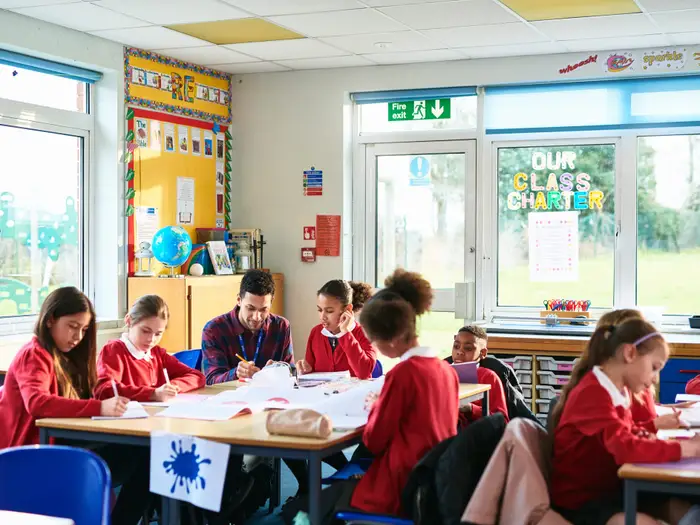
One of the most profound ways to foster leadership is to ensure every child starts on a level playing field. Structured educational programs that utilize uniform apparel, such as the high-quality solutions provided by SKALVI, remove socio-economic visual markers. In this environment, leadership is not determined by who wears the most expensive sneakers, but by who has the best ideas, the most empathy, and the strongest drive.
Focusing on Character Over Brands
When the distraction of fashion brands is removed, students are forced to differentiate themselves through their actions and intellect. This environment creates a meritocracy where true leadership qualities—integrity, communication, and teamwork—are valued above consumerism. It teaches children that their worth comes from within, not from what they buy.
Unity and Belonging
Leadership is also about community. Structured apparel fosters a sense of belonging and team spirit. Just as sports teams wear uniforms to signify unity, students wearing a common ensemble feel part of a collective mission. This sense of belonging empowers children to support one another, fostering a collaborative style of leadership rather than a competitive one.
Professionalism in Early Education: Preparing for the Future
It may seem premature to discuss professionalism in early education, but these early years are exactly when habits are formed. Professionalism for a child doesn’t mean acting like a miniature corporate employee; it means showing respect for the learning environment and for oneself.
When a child wears a structured outfit, they are practicing the ritual of preparation. They learn that different environments require different behaviors and modes of dress. This adaptability is a key leadership trait. By respecting the dress code, they learn to respect rules and structure, which is the first step toward understanding how to guide others within a structure.
Brands that specialize in these programs, such as SKALVI, understand that comfort and durability must coexist with this professionalism. If a child is uncomfortable, they cannot lead. Therefore, the “executive presence” for kids strikes a balance: it is formal enough to command respect, yet comfortable enough to allow for the active play and dynamic learning required in childhood.
Conclusion
Foster leadership skills in children is a multifaceted endeavor that involves emotional support, educational challenges, and the right environment. While clothes do not make the leader, they certainly help set the stage for the leader to emerge. Through the lens of enclothed cognition, we see that what a child wears impacts their self-perception and performance.
By embracing structured educational programs and prioritizing professionalism in early education, we give children the tools to master non-verbal communication for students and build lasting self-confidence in kids. When children feel like they belong and look like they are ready to succeed, they are free to focus on what matters most: growing into the leaders of tomorrow.
FAQ
1. What is personality development in school education?
Personality development in schools refers to structured activities and learning methods that improve a student’s confidence, behavior, communication, and leadership abilities.
2. How does personality development benefit students in the long term?
It prepares students for higher education and future careers by improving decision-making skills, emotional intelligence, and the ability to interact effectively with others.
3. At what age should personality development start?
Personality development should begin at the primary level, as early experiences in communication, teamwork, and responsibility shape a child’s overall growth.