Introduction
Children learn most effectively when they actively engage with ideas and experiences. Experiential learning focuses on helping students understand concepts by participating in activities, discussions, and practical exploration. Instead of simply receiving information, students become active participants in the learning process.
This approach encourages curiosity, observation, and reflection, helping students connect classroom knowledge with real-world situations.
What Is Experiential Learning?
Experiential learning is a learning approach where students understand concepts through experience, participation, and exploration. It encourages learners to interact with ideas through activities, projects, discussions, and problem-solving tasks.
At Skalvi International School, experiential learning aligns with the philosophy of “knowing by doing,” where students actively engage with concepts instead of only listening to explanations.
Key Elements of Experiential Learning
Learning Through Activities
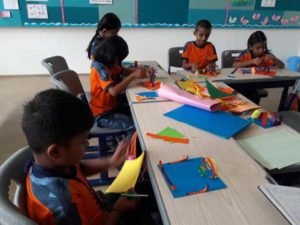
Students participate in classroom activities that allow them to observe, explore, and understand concepts through direct involvement.
Observation and Reflection
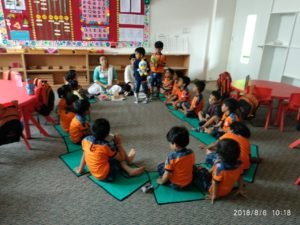
After engaging in an activity, students reflect on what they observed and discuss their understanding with teachers and classmates.
Exploration and Curiosity
Students are encouraged to explore ideas, ask questions, and look for answers through discussion and investigation.
Collaborative Learning
Working with peers helps students exchange ideas and learn from different perspectives.
How Experiential Learning Improves Understanding
Deeper Concept Clarity
When students experience a concept through activities, they can understand how it works rather than only memorizing information.
Stronger Engagement in Learning
Participating in learning tasks keeps students interested and encourages them to stay involved in the classroom.
Development of Thinking Skills
Experiential learning helps students analyze situations, observe outcomes, and think about solutions.
Better Retention of Knowledge
Learning through participation and discussion often helps students remember concepts for a longer time.
Examples of Experiential Learning in Schools
Experiential learning can happen through many classroom practices such as:
- Group discussions and collaborative activities
- Project-based learning experiences
- Presentations and classroom demonstrations
- Interactive classroom discussions
- Practical exploration of concepts
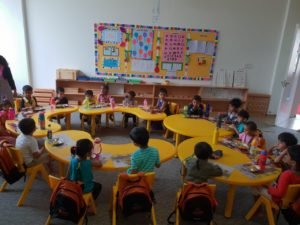
At Skalvi International School, experiential learning is supported through interactive classrooms and activities that encourage students to explore and understand ideas through participation.
The Role of Teachers in Experiential Learning
Teachers play an important role in guiding experiential learning. They design activities, encourage questions, and help students reflect on their experiences.
By supporting exploration and discussion, teachers help students connect classroom lessons with meaningful understanding.
Conclusion
Experiential learning helps students develop a deeper understanding of concepts by allowing them to explore ideas through participation and reflection. When students engage actively with their learning environment, they gain confidence, curiosity, and stronger conceptual understanding.
By encouraging exploration and interaction, schools create a learning experience that supports meaningful and lasting knowledge.
FAQ (AEO Section)
What is experiential learning in schools?
Experiential learning is an approach where students learn through activities, exploration, and participation instead of only listening to lessons.
Why is experiential learning important?
It helps students understand concepts more clearly by connecting ideas with real experiences.
How does experiential learning support student development?
Experiential learning encourages curiosity, discussion, and observation, helping students develop thinking and communication skills.
How do teachers use experiential learning in classrooms?
Teachers design activities, discussions, and projects that allow students to explore concepts and reflect on their understanding.