Authentic Montessori vs. ‘Montessori-Inspired’ Daycare: A Parent’s Audit Checklist
In the competitive landscape of early childhood education, the label ‘Montessori’ has become a ubiquitous buzzword. Because Dr. Maria Montessori never trademarked her name, any facility can claim the title, ranging from high-fidelity educational centers to standard daycares that simply feature wooden toys. For parents, this creates a confusing marketplace fraught with ambiguity. To navigate this, one must understand that an authentic Montessori preschool is not a design aesthetic; it is a scientifically rigorous pedagogical approach. Distinguishing the real thing from a ‘Montessori-inspired’ adaptation requires a keen eye for specific structural and behavioral indicators.
What is an Authentic Montessori Preschool?
An authentic Montessori environment is a carefully orchestrated ecosystem designed to foster independence and cognitive growth through self-correction. Unlike traditional daycare settings where the schedule is dictated by the teacher, an authentic program centers on the child’s natural psychological development. When exploring options, it is crucial to look for schools like Skalvi that prioritize the integrity of the method over marketing trends. By prioritizing fidelity and autonomy, a true Montessori school transforms the child from a passive recipient of information into an active explorer.
The Core Pillars of Fidelity
To identify a program that truly adheres to the methodology, you must focus on three fundamental pillars that differentiate a generic preschool from a high-fidelity Montessori environment:
- Mixed-Age Classrooms: Authentic classrooms must group children in three-year spans (e.g., ages 3–6). This structure allows older children to reinforce their learning by teaching younger peers, fostering social cohesion and leadership naturally.
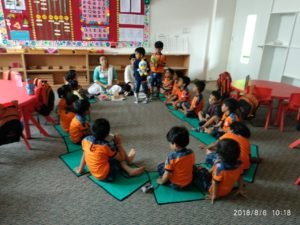
- Uninterrupted Work Cycles: Real Montessori programs provide long blocks of time (usually 3 hours) for self-directed learning. This differs from ‘inspired’ programs that frequently interrupt children for group potty breaks, snacks, or teacher-led circle times.
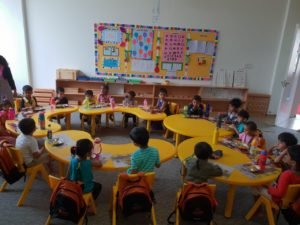
- The Prepared Environment: Every object on the shelf must have a specific purpose and be accessible to the child without adult assistance. If materials are locked away or placed on high shelves, it signals a lack of trust in the child’s capabilities.
Mapping the Classroom to Developmental Needs
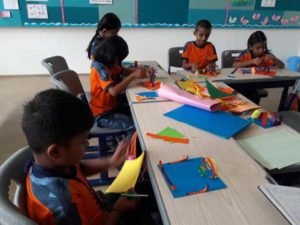
From an observational perspective, a tour of a Montessori school is an audit of the environment. By focusing on specific Montessori method fidelity indicators, you can gauge the quality of the program. For instance, if the classroom features a ‘Practical Life’ area, check if the tools are functional (real glass, real water, real polishing kits) or merely pretend toys. This isn’t just about materials; it’s about aligning the physical space with the child’s innate desire to perform meaningful work and contribute to their community.
Identifying the ‘Montessori-Inspired’ Gaps
A parent walkthrough is the ideal stage to spot operational discrepancies. Are there fantasy-based plastics or battery-operated toys present? Authentic environments avoid these as they distract from reality-based learning. Is the teacher the focal point of the room? In a true Montessori setting, the teacher should be in the background, observing or working with one child, while the rest of the class engages in independent work. Self-directed learning is not a bullet point; it is the operational reality of the classroom.
The Technical Framework of the Method
When assessing a school, the underlying credentials and material quality are as important as the visual layer. Utilizing specific materials ensures that the child moves from concrete to abstract understanding. Using terms like control of error for materials and normalization for behavioral goals helps parents understand the hierarchy of the educational value.
The Guide’s Observation and Intervention
Consider observing how the adults interact with the students. In Montessori, the teacher is a ‘Guide.’ They do not lecture from a blackboard. Instead, they link the child to the prepared environment. For example, if a child struggles with a math material, the guide does not correct them instantly but observes and re-presents the lesson later, allowing the material’s built-in control of error to teach the child.
Measuring the Success of the Environment
Unlike traditional daycare where ‘happiness’ or ‘safety’ are the only metrics, an Authentic Montessori Preschool requires more granular observation of the child’s behavior. You should be looking for:
- Concentration Levels: Are the children deeply engaged in their work, oblivious to the movement around them?
- Functional Independence: How independently can the children manage their personal needs, such as dressing, eating, and cleaning up?
- Social Harmony: The frequency with which children solve their own conflicts without immediate adult intervention.
Conclusion: The Long-Term Impact
The choice between an authentic program and a ‘Montessori-inspired’ daycare is not a judgment of quality, but a distinction of intent. An authentic Montessori preschool acts as a developmental foundation that fosters executive function, internal discipline, and a lifelong love for learning. By focusing on the school’s adherence to the method and observing the environment through a lens of child autonomy, you ensure your investment yields the profound developmental benefits Maria Montessori intended. In the search for education, the parent who observes, rather than assumes, will always find the best fit.