The solution lies in community-first models—educational frameworks that prioritize human interaction as much as academic rigor. By leveraging digital tools to foster meaningful relationships, institutions like Skalvi are proving that physical distance does not equate to social isolation. In fact, when done correctly, the virtual classroom can offer a more curated and safe environment for social growth than traditional settings.
The Myth of the Isolated Online Learner
The stereotype of the online student is often one of a child sitting alone in a dark room, staring at a screen for six hours a day. This imagery is outdated. Modern collaborative online education is dynamic, interactive, and often louder (digitally speaking) than a physical classroom where students are frequently told to sit still and be quiet. In a well-designed virtual environment, the barriers to entry for social interaction are lowered. Introverted students, who might be overshadowed in a physical room, often find their voices through chat functions and breakout rooms, leveling the social playing field.
What is a Community-First Model?
A community-first model flips the script on traditional online learning. Instead of delivering content first and hoping students discuss it later, these models build the community as the foundation upon which learning occurs. This approach relies on intentional design choices that mandate interaction.
- Synchronous Cohorts: Students move through curriculums together, ensuring familiar faces and consistent peer groups.
- Live Interactive Sessions: Rather than passive lectures, live sessions are utilized for debate, discussion, and group problem-solving.
- Shared Digital Spaces: Just as schools have quads and cafeterias, virtual schools utilize forums and social hubs where academic pressure is removed.
The Power of Peer-to-Peer Learning
One of the most effective ways to bridge the social gap is through structured peer to peer learning. When students teach one another, they do more than reinforce their own knowledge; they build trust and empathy. In a community-first online model, teachers act more as facilitators while students take the lead in collaborative projects.
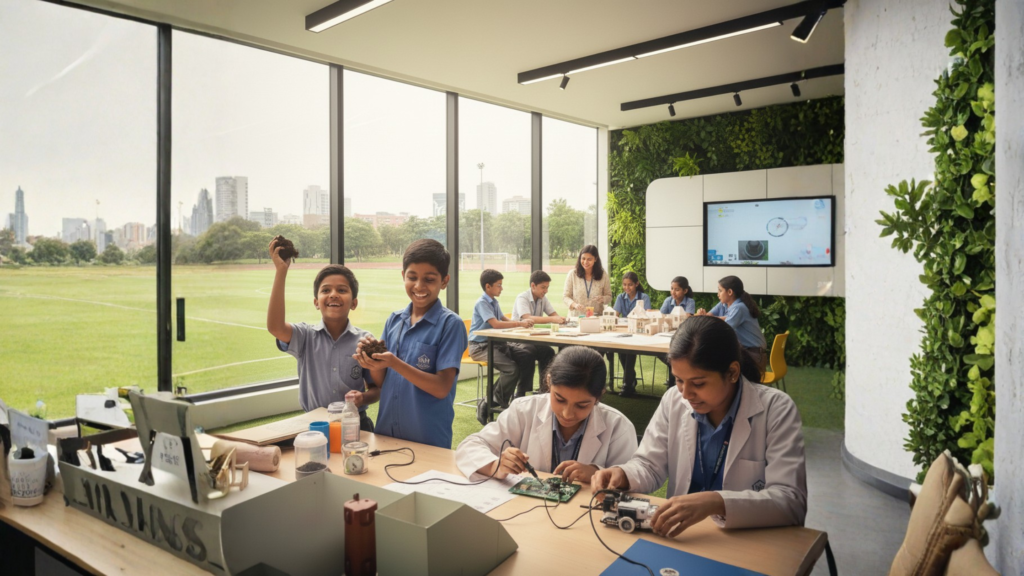
For example, a science lesson might involve pairs of students from different time zones collaborating on a data simulation. They must communicate, negotiate roles, and present their findings together. This necessity drives socialization. It transforms the screen from a barrier into a bridge, fostering the kind of teamwork that is highly valued in the modern remote workforce.
Strategies for Online School Community Building
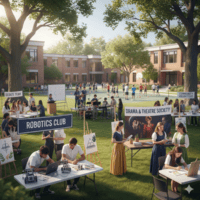
Building a culture without a building requires creativity. Online school community building relies on creating shared experiences that transcend geography. Schools are now implementing virtual spirit weeks, e-sports leagues, and digital art galleries to create a sense of school pride.
Virtual Clubs and Extracurriculars
The bell doesn’t ring at 3:00 PM in a virtual school. Extracurriculars are vital for unstructured socialization. From coding clubs to virtual book circles, these spaces allow students to bond over shared passions rather than just shared assignments. This creates depth in relationships, moving connections from “classmates” to “friends.”
Facilitating Virtual Student Networking
One distinct advantage of online schooling is the elimination of geographic constraints. Virtual student networking allows a child in London to collaborate with a peer in Tokyo. This global exposure teaches cultural competency and broadens horizons in a way local schools cannot. However, facilitating these networks requires robust safety measures.
Platforms must be monitored to ensure interactions remain positive and constructive. By creating safe, moderated channels for communication, schools encourage students to build a professional and social network early in life. These digital citizenship skills are crucial for the 21st century, where much of their future professional lives will likely be conducted online.
The Future of Socialization is Hybrid
The debate over socialization in online schooling is shifting from “if” it can happen to “how” we can make it better. By adopting community-first models, we are not just solving a gap; we are creating a new paradigm of connectivity. Through collaborative online education, we are raising a generation that is digitally native, culturally aware, and socially agile.