Self-motivated learning shifts a child’s focus from passive memorization to active inquiry. By fostering student autonomy in learning, children replace the fear of exams with a natural drive to understand and apply knowledge. This experiential approach builds resilience, encourages peer collaboration, and prioritizes life skills over traditional testing.
Traditional education often relies on pressure, forcing students to memorize data to avoid failure. This suppresses natural curiosity. True cognitive development requires a shift toward an investigative mindset where students take ownership of their journey.
At Skalvi, we define modern pedagogy by moving beyond the “information receiver” model. When students stop studying for the test and start learning for life, they develop the scientific temperament needed for the real world.
The Mechanics of Student-Led Inquiry
Transitioning to a self-motivated model requires an environment where questioning is valued over passive listening. It transforms the classroom into a dynamic lab of discovery.
- Students frame investigative questions before seeking answers.
- Classrooms function as interactive hubs rather than lecture halls.
- Knowledge retention skyrockets through peer-to-peer teaching.
- Mistakes are treated as essential data points for active problem-solving.
Turning Fear into Curiosity: Student Autonomy in Learning
Fear-based instruction restricts emotional intelligence and limits cognitive bandwidth. Progressive education removes these barriers by empowering students to lead their own learning process.
Life Skills Over Testing
A curriculum focused solely on marks ignores holistic development. By prioritizing life skills over testing, we prepare students for complex challenges. Children learn to communicate effectively, analyze critically, and collaborate seamlessly.
Knowing by Doing: Active Participation
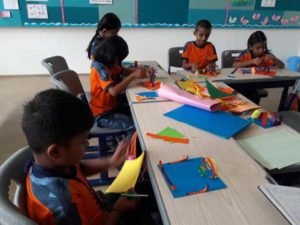
Students learn best through action. Applying concepts through presentations, role plays, and impromptu debates solidifies understanding. This active participation transforms the student from a spectator into an engaged explorer.
The Architecture of Active Learning
Physical and pedagogical structures dictate engagement levels. Intentional design is required to foster a student-driven environment that nurtures social intelligence.
The ‘Teach to Learn’ Methodology
Cognitive science confirms that teaching a concept reinforces mastery. Our “Teach to Learn” philosophy ensures that when a student teaches a peer, they retain approximately 90% of the information. This creates a supportive ecosystem where students validate each other’s growth.
U-Shaped Classrooms for Interaction
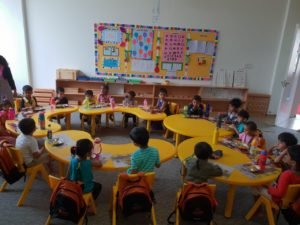
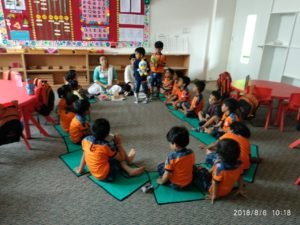
Physical space influences dialogue. Linear desk arrangements promote one-way instruction. Our U-shaped classrooms provide equal opportunity for interaction, positioning teachers as facilitators and students at the center of the conversation.
Daily Happy Hobby Hours
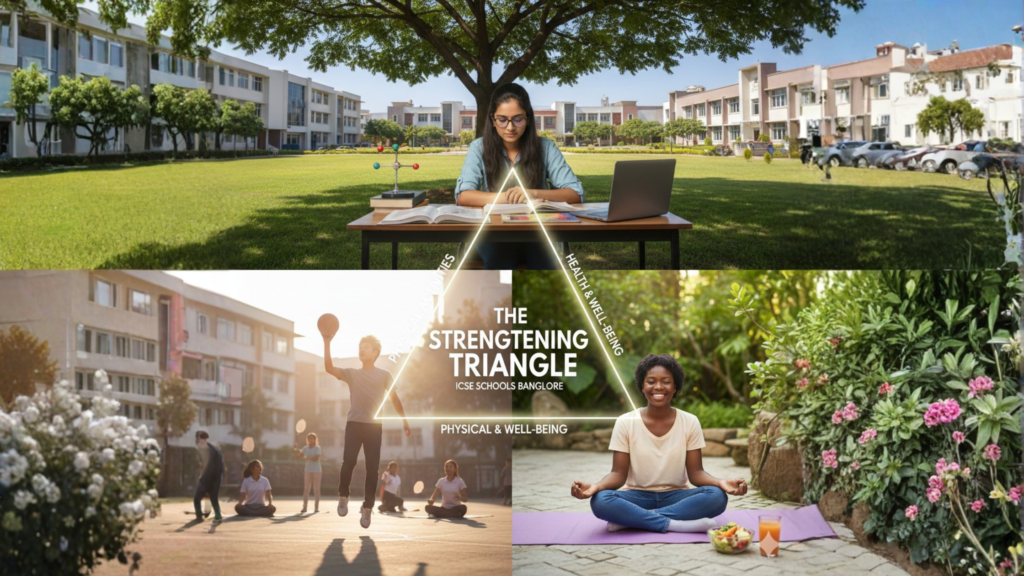
Non-scholastic development is vital for a balanced mind. We allocate one hour daily to sports, arts, and physical activities. These “Happy Hobby Hours” build discipline and ensure better academic retention by reducing stress.
A Foundation for Independent Growth
True education builds capability, not just memory. Discerning parents recognize the value of an experiential environment that prioritizes emotional intelligence. Skalvi provides an intentionally designed space for this growth, maintaining a 1:24 teacher-student ratio for individualized attention.
Frequently Asked Questions
What is self-motivated learning in child development?
Self-motivated learning is an educational approach where students drive their own inquiry. Instead of passive memorization, children frame their own questions, seek information independently, and engage in hands-on exploration to build mastery.
How does student autonomy reduce the fear of exams?
Autonomy shifts the focus from external pressure to internal curiosity. When students control their learning process, they build confidence in their problem-solving abilities, which naturally reduces performance anxiety during assessments.
Why are life skills prioritized over standard testing?
Standard testing often measures short-term recall. Prioritizing life skills like critical thinking and emotional intelligence equips students to navigate real-world scenarios that standardized tests cannot replicate.