Understanding the Power of Curiosity-Driven Education
At its core, inquiry-based learning is an educational approach that focuses on investigation and problem-solving. It contrasts sharply with the traditional “deposit model” of teaching, where the teacher deposits information into the students’ minds. Instead, IBL encourages students to ask questions, conduct research, and demonstrate their understanding through creation.
Moving Beyond Rote Memorization
While memorizing multiplication tables or historical dates has its place, it rarely engages the higher-order thinking skills necessary for the modern world. Curiosity-driven education prioritizes the process of learning over the mere retention of facts. When students understand the “how” and the “why,” the “what” becomes much easier to remember. This approach not only makes learning more enjoyable but also helps children develop resilience when they encounter complex problems.
The Natural Cycle of Inquiry
Effective inquiry follows a cyclical process: orientation, conceptualization, investigation, conclusion, and discussion. By guiding students through this cycle, educators provide a structured framework where creativity can flourish. This structure is essential; without it, inquiry can become chaotic. The goal is to channel student-led questioning into productive avenues of research.
Core Inquiry-Based Learning Strategies for the Classroom
Implementing these methods does not require a complete overhaul of the curriculum. Instead, it involves shifting the focus of existing lessons. Here are some practical inquiry-based learning strategies that can be applied immediately.
Implementing Student-Led Questioning
One of the most powerful shifts a teacher can make is moving from teacher-generated questions to student-led questioning. Instead of starting a lesson with a lecture, start with a provocation—an image, a video, or an object—and ask the students what they want to know about it. Techniques like the Question Formulation Technique (QFT) allow students to brainstorm questions without judgment, prioritize them, and then use those questions to guide their learning objectives.
The “I Wonder” Wall Technique
Visual aids are crucial in primary education. An “I Wonder” wall is a dedicated space in the classroom where students can post sticky notes with questions that arise during lessons or throughout the day. This validates their curiosity and provides a repository of ideas for future research projects or free-time investigation. It turns a fleeting thought into a concrete learning opportunity.
Scaffolding for Guided Discovery
Inquiry does not mean leaving students unsupported. Scaffolding is vital. Teachers act as facilitators who provide the necessary resources and prompts to help students reach the next level of understanding. For example, if a student asks why plants grow towards the light, the teacher might provide varied light sources and plants rather than simply explaining photosynthesis immediately. This method of guided discovery ensures that the victory of understanding belongs to the student.
Developing Critical Thinking for Kids Through Real-World Problems
The ultimate goal of inquiry is to foster critical thinking for kids. This involves analyzing information, evaluating evidence, and forming reasoned judgments. The best way to do this is by connecting the curriculum to the real world.
Case Studies and Role-Playing
Even primary students can engage with complex issues when they are presented age-appropriately. For instance, a science lesson on water cycles can evolve into a project about local water conservation. By presenting a real-world problem, students must use critical thinking to devise solutions. Role-playing different stakeholders (e.g., a farmer, a city planner, a conservationist) helps them understand multiple perspectives and the complexity of real-world decisions.
Socratic Seminars Adapted for Primary Students
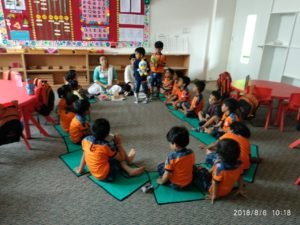
While often reserved for higher education, modified Socratic seminars can be highly effective for younger children. Sitting in a circle to discuss a specific text or open-ended question encourages active listening and respectful debate. The focus is on dialogue rather than debate; students learn to build upon each other’s ideas rather than simply waiting for their turn to speak. This social aspect of inquiry is critical for emotional and intellectual development.
Active Participation Techniques to Maintain Engagement
Keeping energetic primary students focused requires dynamic methods. Active participation techniques ensure that inquiry remains a hands-on experience rather than a theoretical one.
Hands-On Project-Based Learning
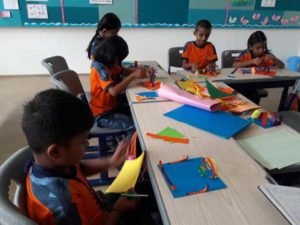
Project-Based Learning (PBL) is the practical application of inquiry. Whether it is building a bridge out of recycled materials to understand physics or creating a mock business to learn math, PBL allows students to get their hands dirty. These projects should culminate in a public product or presentation, giving the students a sense of ownership and pride in their work.
Integrating Technology as a Research Tool
In the digital age, inquiry often leads to the internet. Teaching students how to use technology as a tool for investigation—rather than just entertainment—is a key literacy skill. specialized search engines for kids and educational apps can help safe-guard their exploration while allowing them to access the vast information required to answer their own questions.
Conclusion
Fostering curiosity in primary schools is an investment in the future. By utilizing inquiry-based learning strategies, we move away from passive absorption of facts and toward a dynamic, engaging educational environment. When we encourage student-led questioning and facilitate critical thinking for kids, we are not just teaching them to pass a test; we are teaching them to navigate life.
Educational transformation requires the right partners and resources. At SKALVI, we are dedicated to supporting educators and institutions in implementing these forward-thinking methodologies. By embracing active participation techniques and honoring the natural curiosity of the child, we pave the way for a generation of innovators, thinkers, and lifelong learners.