The primary peer learning benefits for students center on the “Teach to Learn” principle, where explaining a concept to others helps students remember about 90 percent of what they learn. By teaching peers, learners move from passive observers to active participants, requiring them to process, structure, and articulate concepts clearly. This approach encourages deeper understanding compared to conventional lecture-based methods.
Maximizing Peer Learning Benefits for Students
Student-driven learning transforms the classroom dynamic. The focus shifts from simply receiving information to actively applying knowledge. This approach supports long-term development in several ways:
- Develops scientific temper and evidence-based thinking through collaborative problem solving.
- Enhances verbal and written communication capacities through discussion and explanation.
- Fosters independent thinking by encouraging curiosity and student-led inquiry.
- Builds cooperative skills required for life beyond academics.
Understanding the Teach to Learn Principle
The Teach to Learn approach shows that when students explain a concept to their peers, they remember about 90 percent of what they learn. This method encourages active engagement rather than passive listening.
Students also follow the philosophy of “Knowing by Doing.” By explaining and demonstrating concepts, children apply their natural habit patterns while learning. This creates a genuine joy for learning and helps students transform into active learners who participate fully in the learning process.
Collaborative learning strengthens understanding because students reciprocate concepts they have learned, helping each other clarify ideas and build confidence in expressing them.
Active Learning for Kids in U-Shaped Classrooms
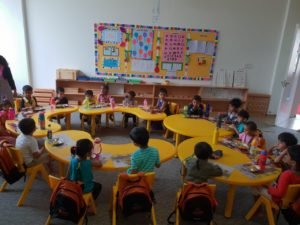
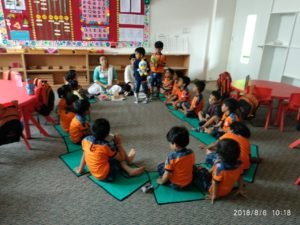
The classroom environment plays an important role in engagement. Traditional row seating often limits interaction. At Skalvi, U-shaped classrooms provide equal opportunity for interaction and clear visibility between teachers and students.
Teachers guide and facilitate discussions while students face each other directly. This arrangement supports student-driven learning, encouraging children to think, understand, and seek information independently.
Peer interaction naturally develops in this environment, making learning a shared and visible process.
Integrating Collaborative Learning Strategies
Learning becomes meaningful when knowledge is applied. Integrated term projects at Skalvi encourage students to demonstrate their learning outcomes through practical activities.
Students present their work through role plays, discussions, and collaborative presentations, allowing them to apply what they have learned in real situations.
Programs are designed according to developmental stages. Foundational years focus on social interaction and cooperative learning, while middle and secondary years encourage greater depth, critical thinking, and evidence-based reasoning.
The Parent-in Programme provides opportunities for students to present their learning outcomes to parents, helping them build confidence and communication skills.
Life Beyond Academics: Non-Scholastic Development
Learning extends beyond academic subjects. At Skalvi, one hour every day is dedicated to Happy Hobby Hours, where students participate in activities such as sports, visual arts, music, dance, theatre, and martial arts.
Non-scholastic areas are given equal importance, helping children develop creativity, teamwork, and emotional awareness alongside academic learning.
This balanced approach supports the idea of Life Beyond Academics, encouraging students to explore different interests and abilities.
Frequently Asked Questions
What are the main peer learning benefits for students?
Peer learning encourages active participation. When students explain concepts to peers, they remember about 90 percent of what they learn. It also improves communication skills, critical thinking, and collaborative learning.
How does student-led education work?
Student-led education encourages children to frame questions, explore ideas, and find answers independently. Teachers guide the process while students take responsibility for understanding concepts through participation and discussion.
Why is active learning for kids important?
Active learning encourages students to apply the Knowing by Doing approach. By participating, discussing, and demonstrating concepts, children understand ideas more clearly and develop skills that support learning beyond the classroom.